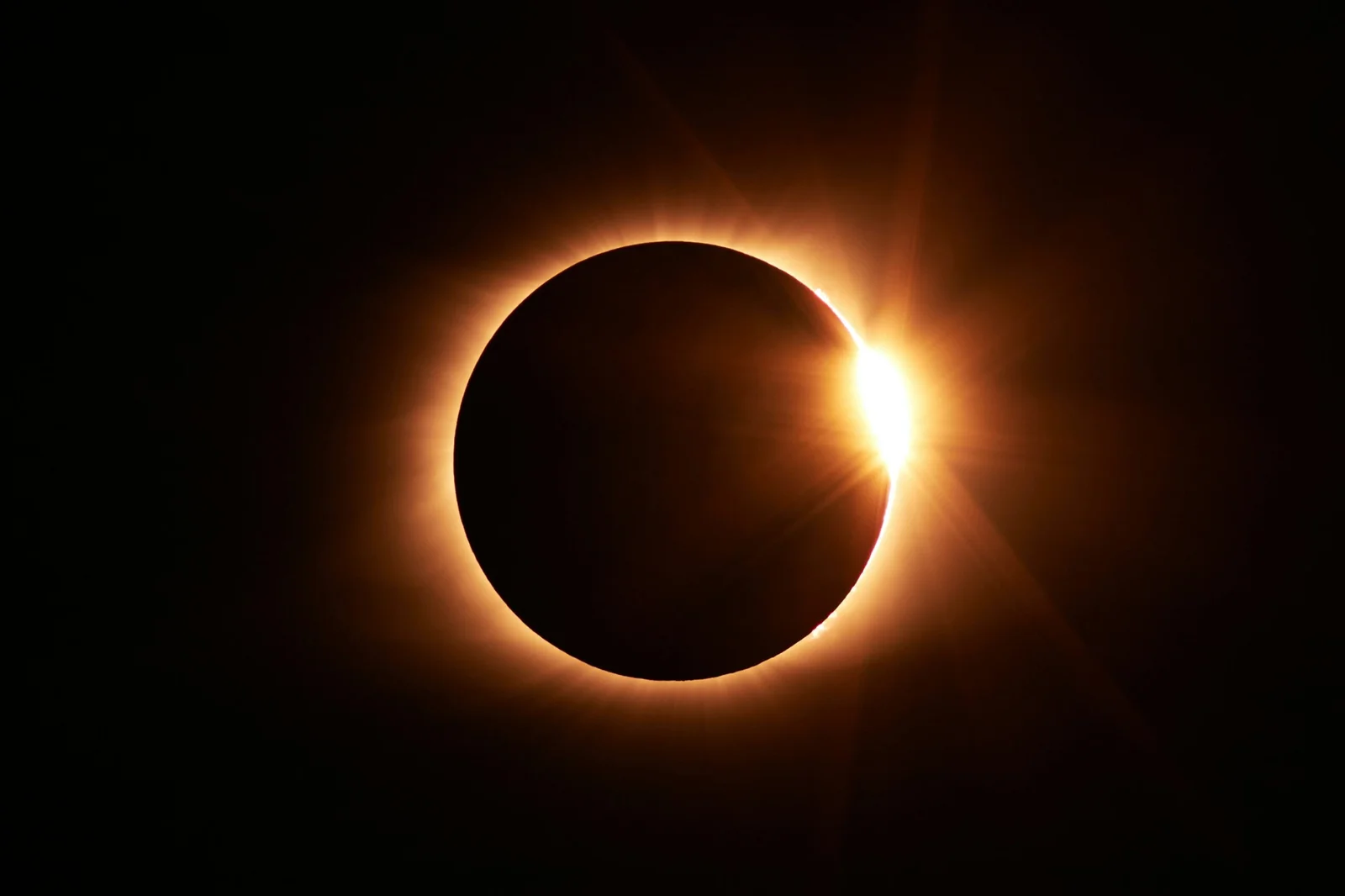
A total eclipse usually lasts a minute or two. On 2 August 2027, ours will last more than six.
I’ve been telling every guest who calls about it since the date first came up in our office — mostly because I don’t think most people know what’s coming yet, and I want ours to already be somewhere good when it does.
The date
Six minutes of totality
Total solar eclipses come and go quickly almost everywhere they touch. This one is different. Along the centerline off Egypt’s southern Red Sea coast, the sun disappears for around six minutes twenty seconds — one of the longest stretches of daytime darkness anywhere on the 2027 path. A little further inland, over Luxor, it runs a few seconds longer still.
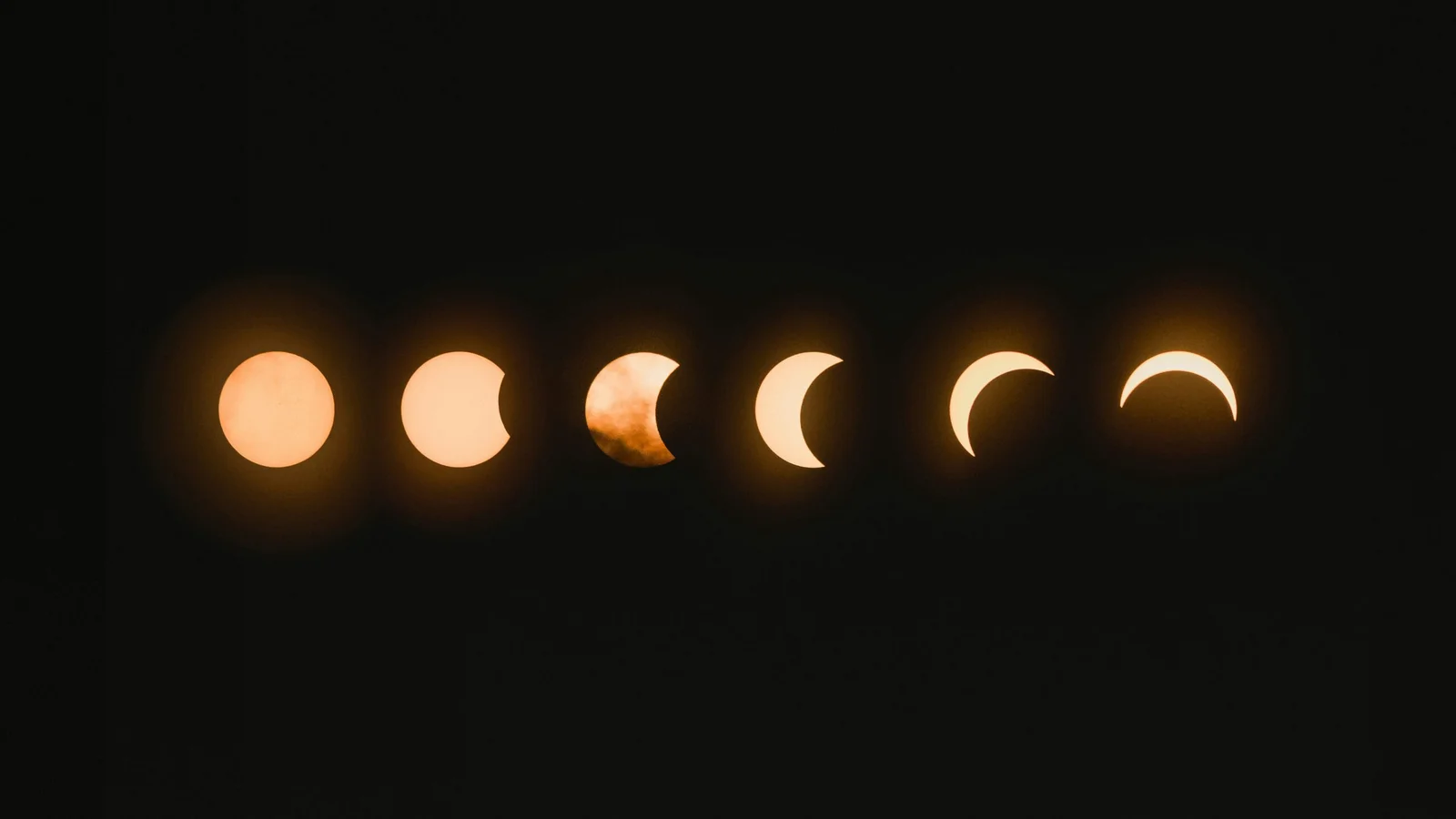
Six minutes doesn’t sound like much until you’ve stood through one. Long enough for the temperature to drop, for the birds to go quiet, for the horizon to turn the color it turns at dusk — at noon.
The place
Egypt, twice over
The path happens to cross the two halves of Egypt we already work in every week: the temples of Luxor, and the Red Sea coast south of Marsa Alam. Standing in Luxor with the columns of Karnak overhead, it’s hard not to feel like whoever built this place understood the sky better than we give them credit for.
But temples fill up. Luxor is already expecting record crowds for eclipse week, and there’s only so much room around a monument that’s stood for three thousand years.
The sea has no such limit.
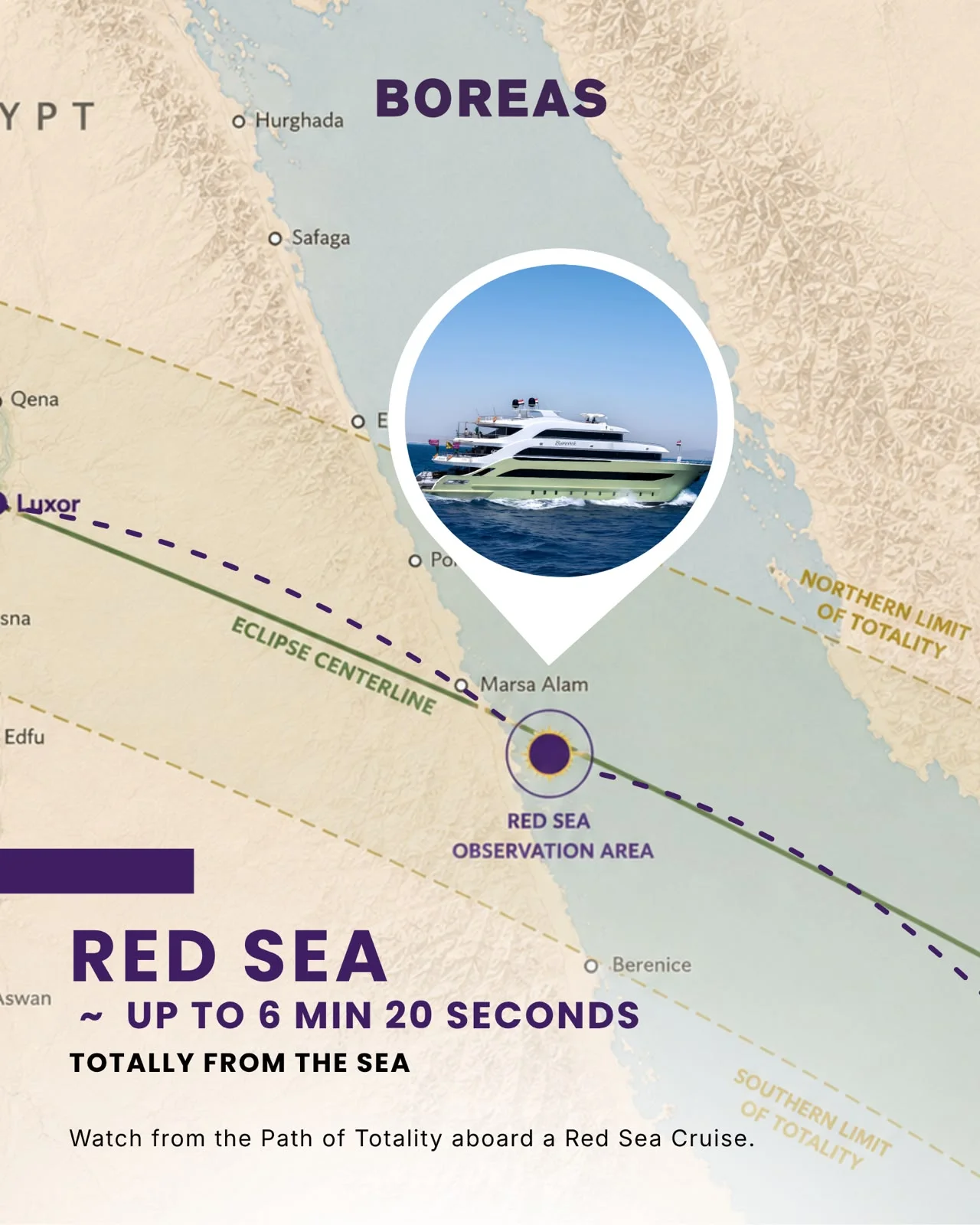
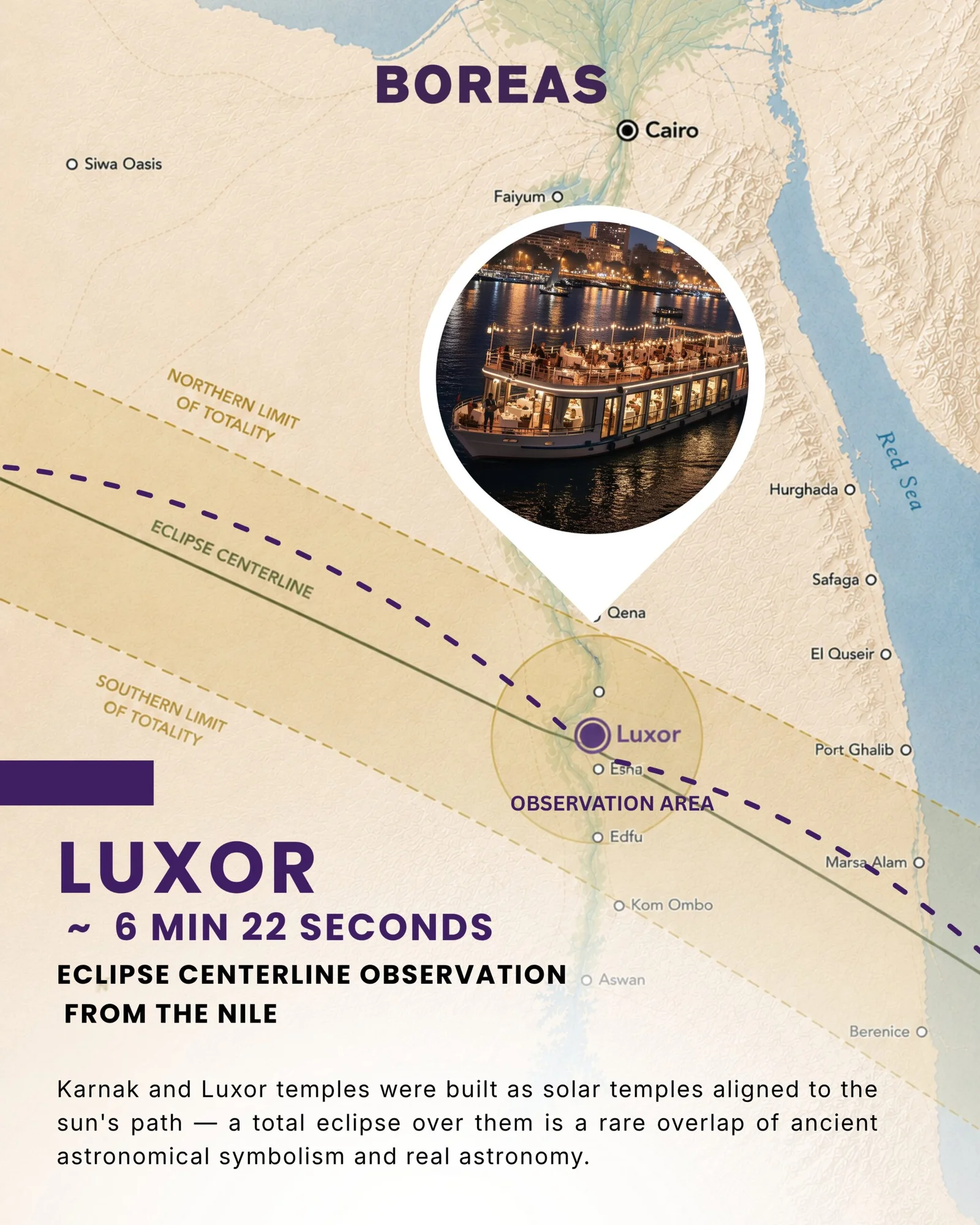
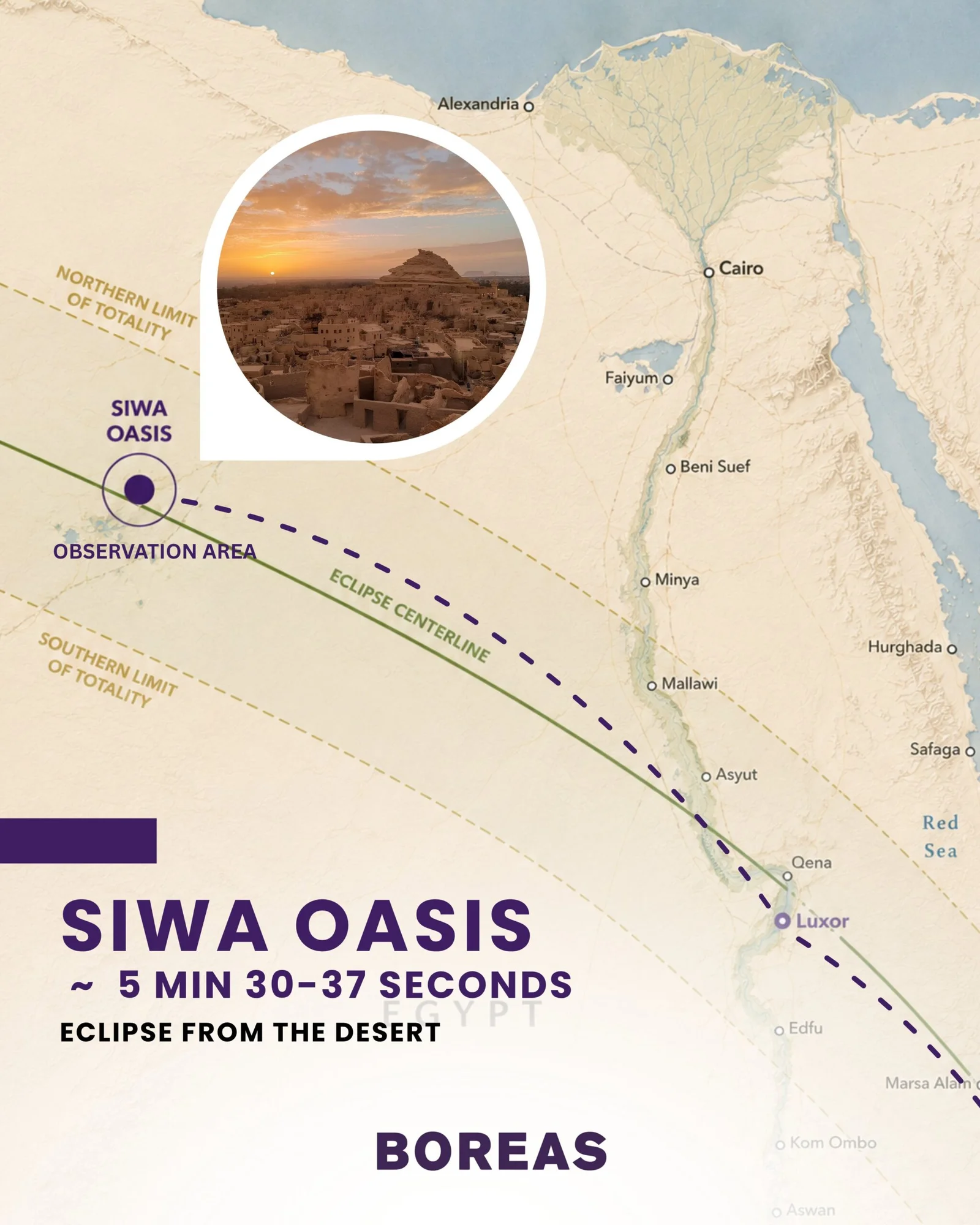
Three places to stand in the shadow: the Red Sea, Luxor, or the Siwa desert.
The view
Why we’re not doing this from shore
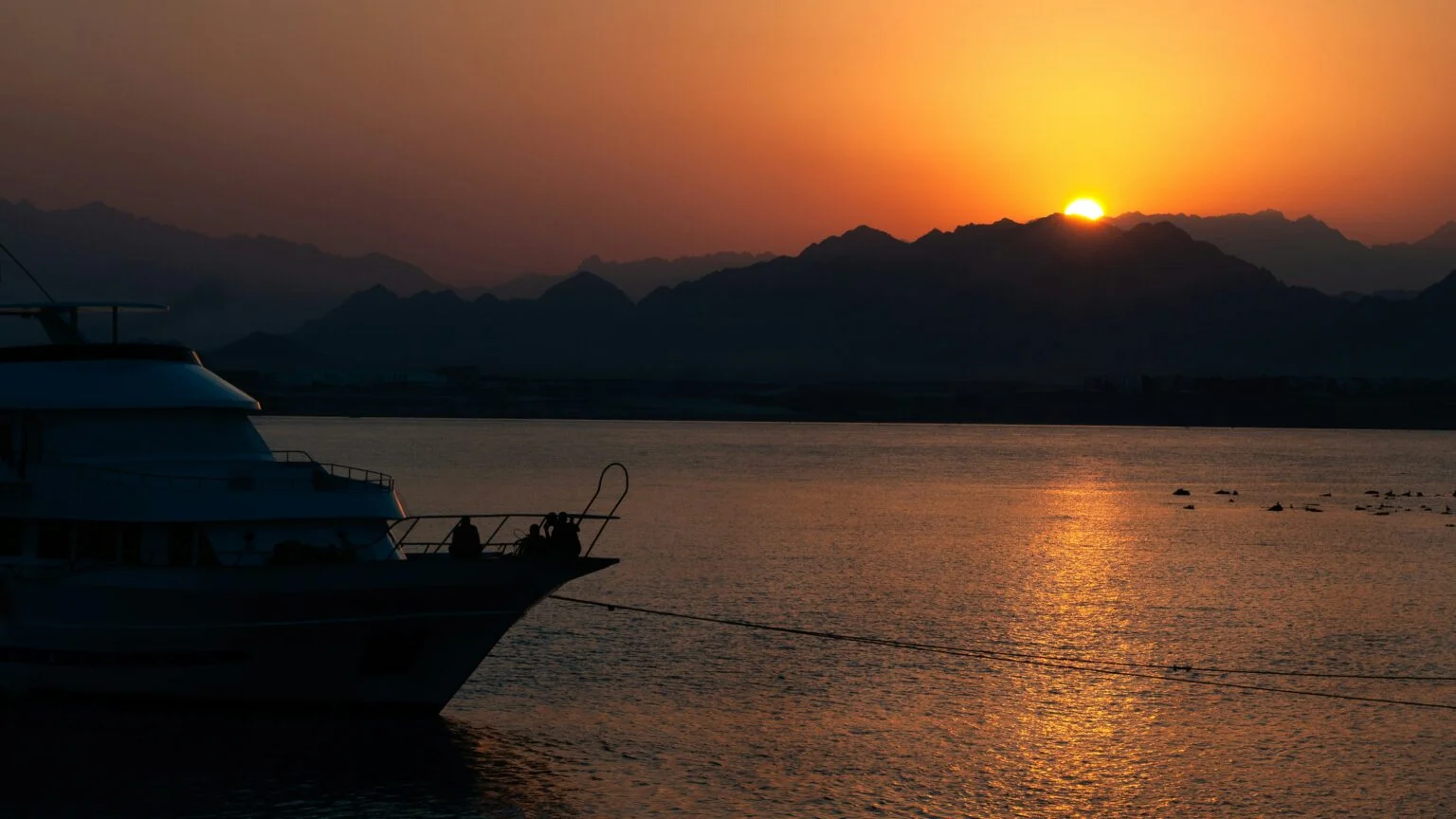
A hotel can’t move. If a cloud sits over it at one in the afternoon on 2 August, that’s the view you get. A boat can reposition that morning if the sky looks wrong anywhere along the coast.
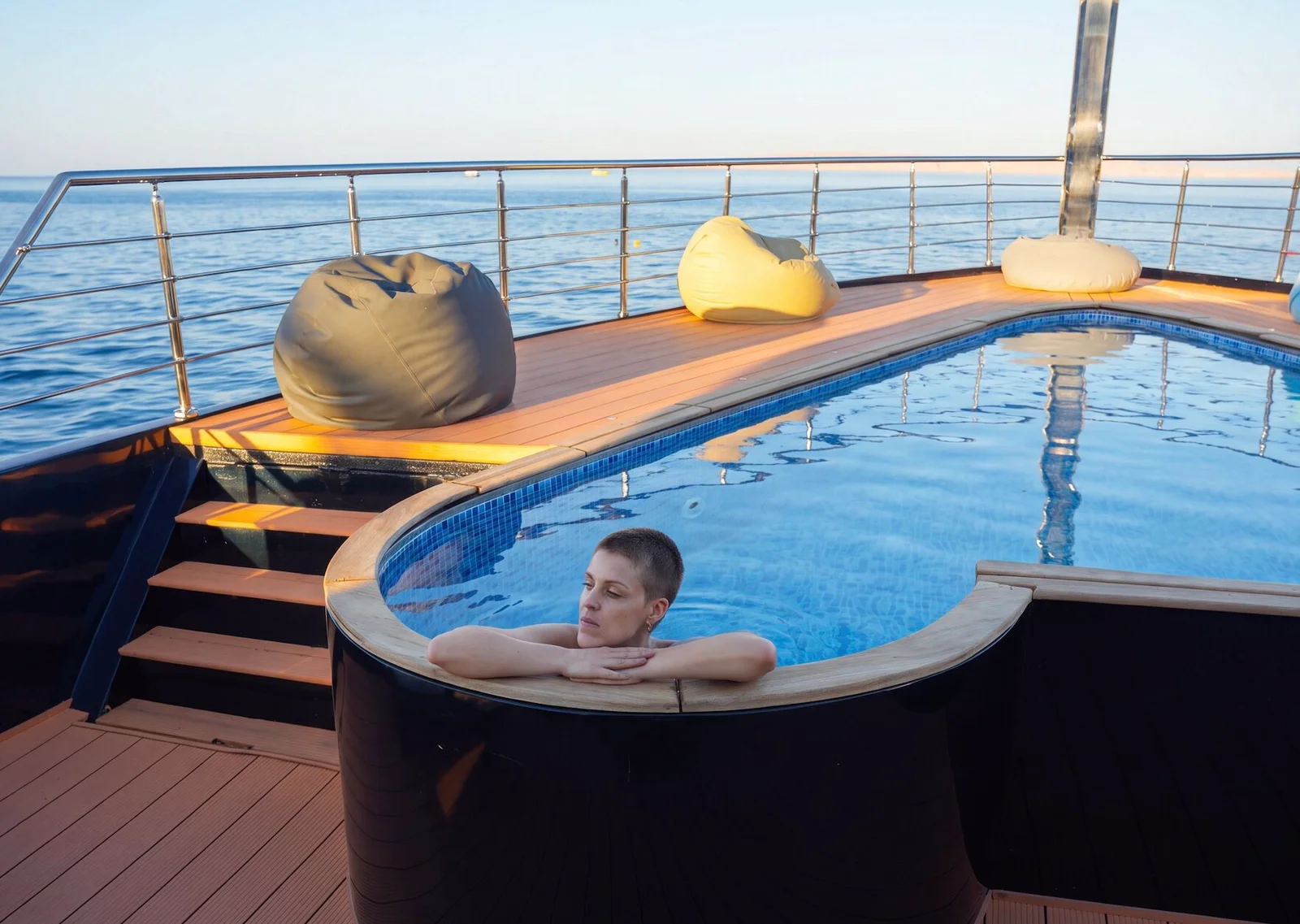
The whole advantage of a boat is a horizon with nothing in it.
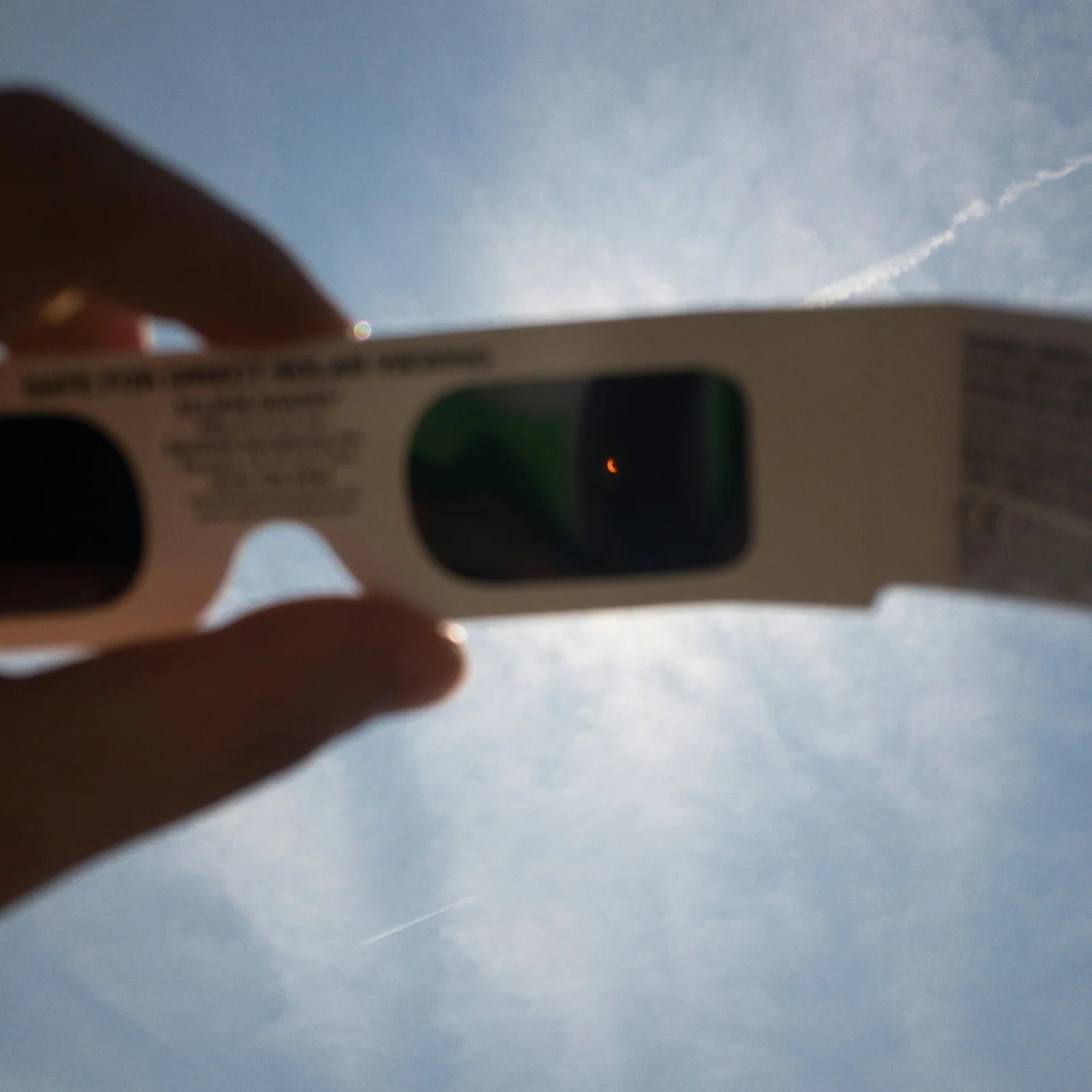
Out past Berenice there’s open water, no buildings, no crowd, and — this is the part I actually love — a normal week of diving and snorkeling built around one very abnormal afternoon. Guests come up from a reef dive, put on eclipse glasses, and forty minutes later the sky goes dark over open sea for six minutes. Then everyone’s back in the water by sunset.
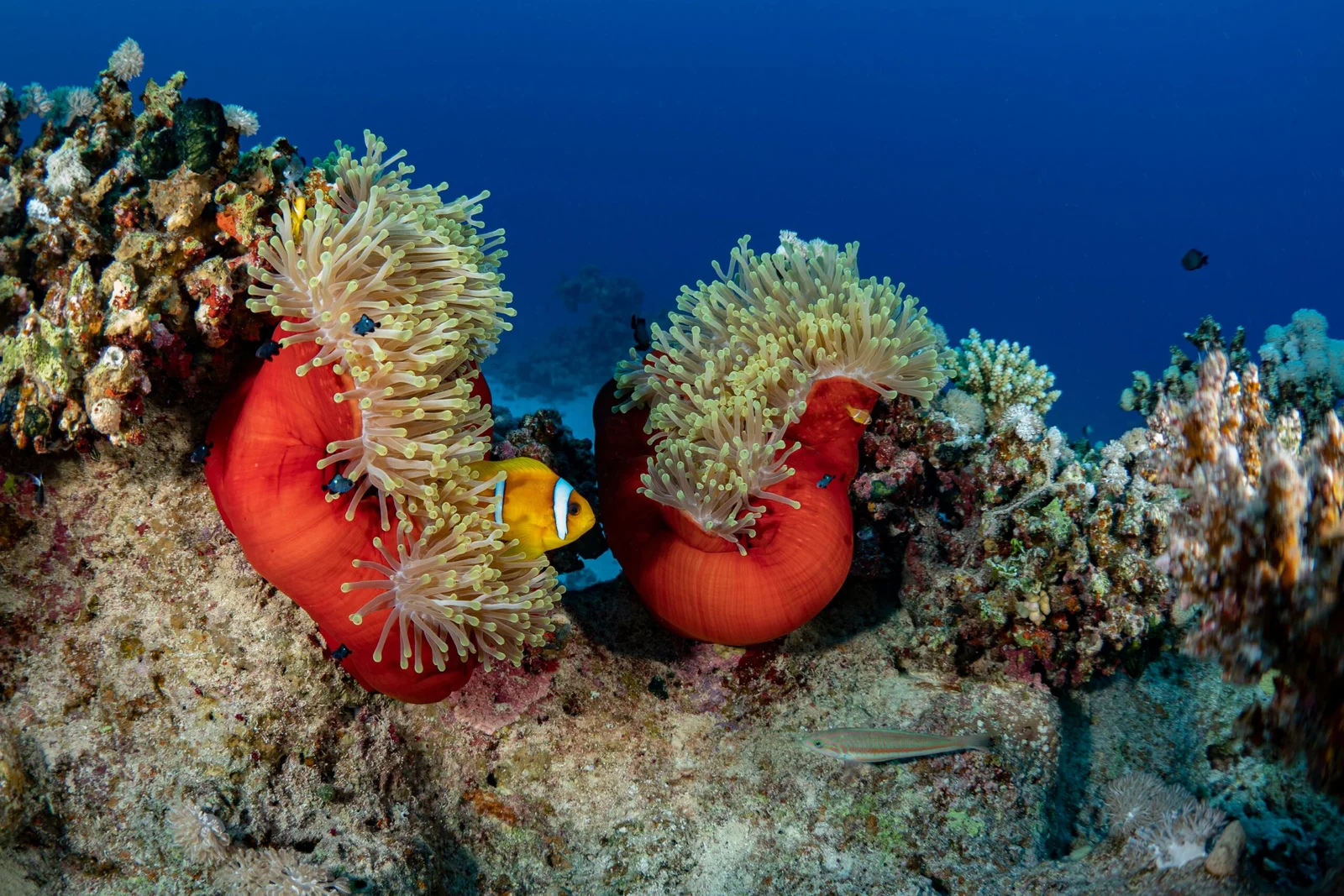
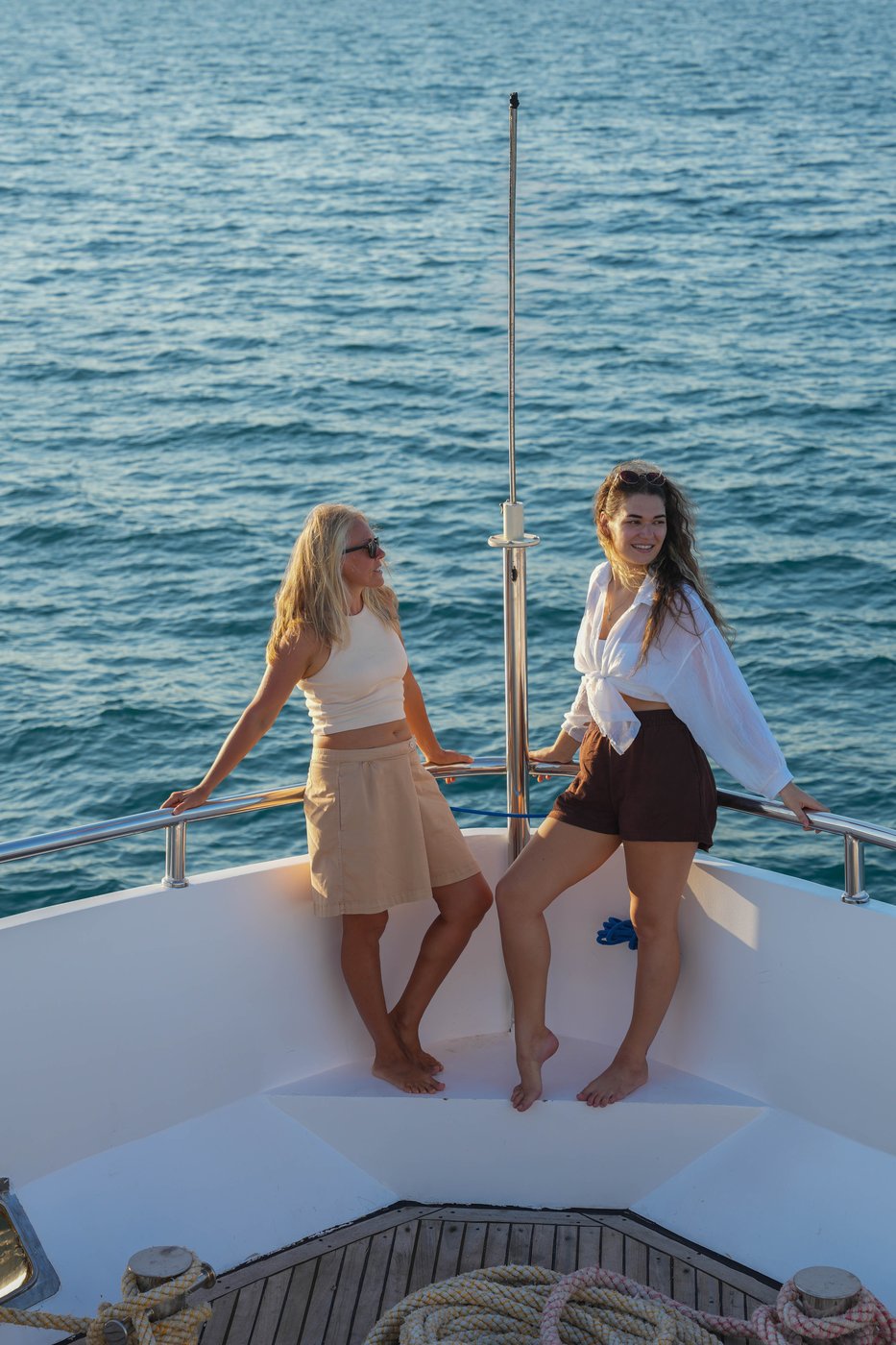
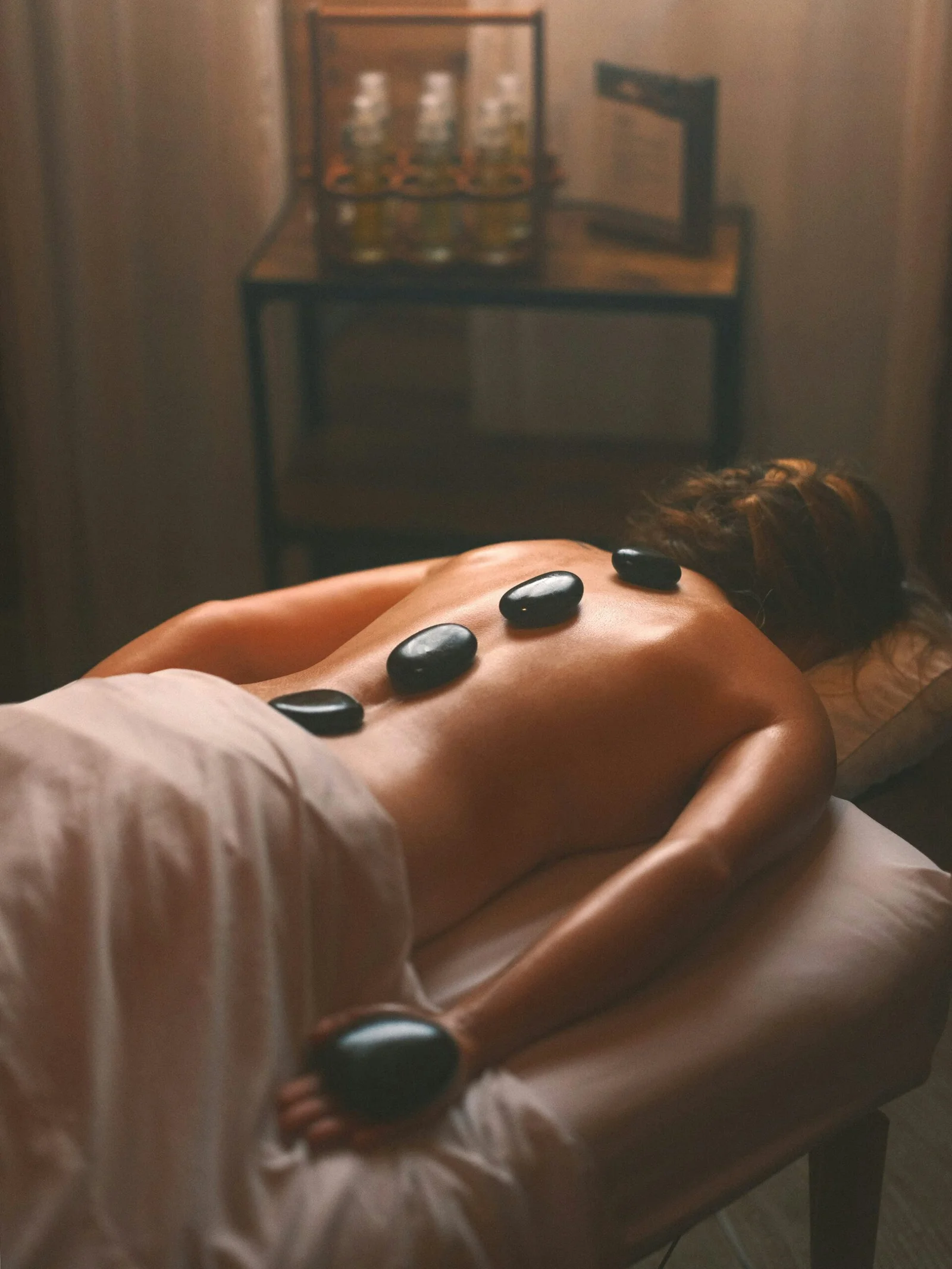
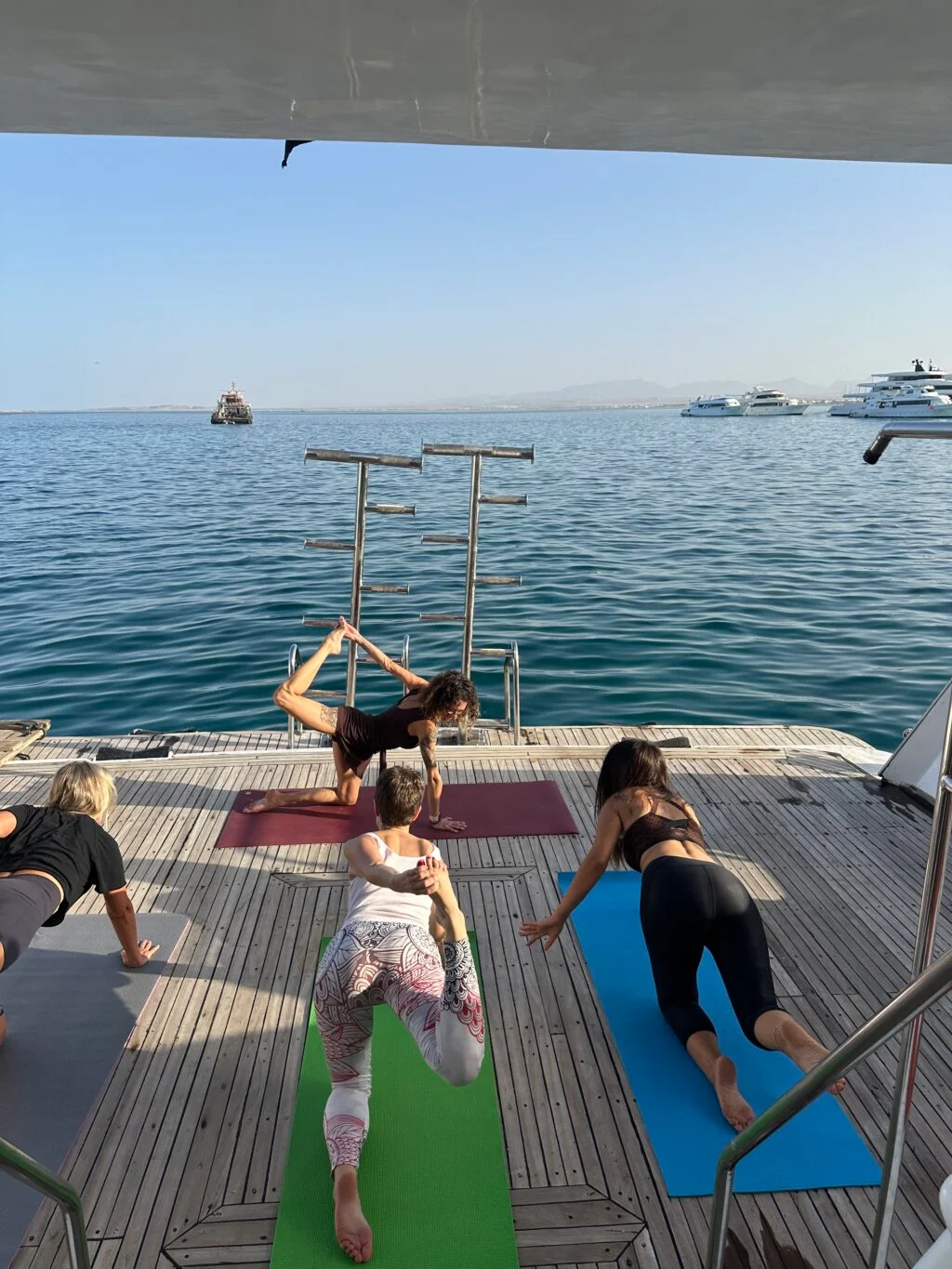
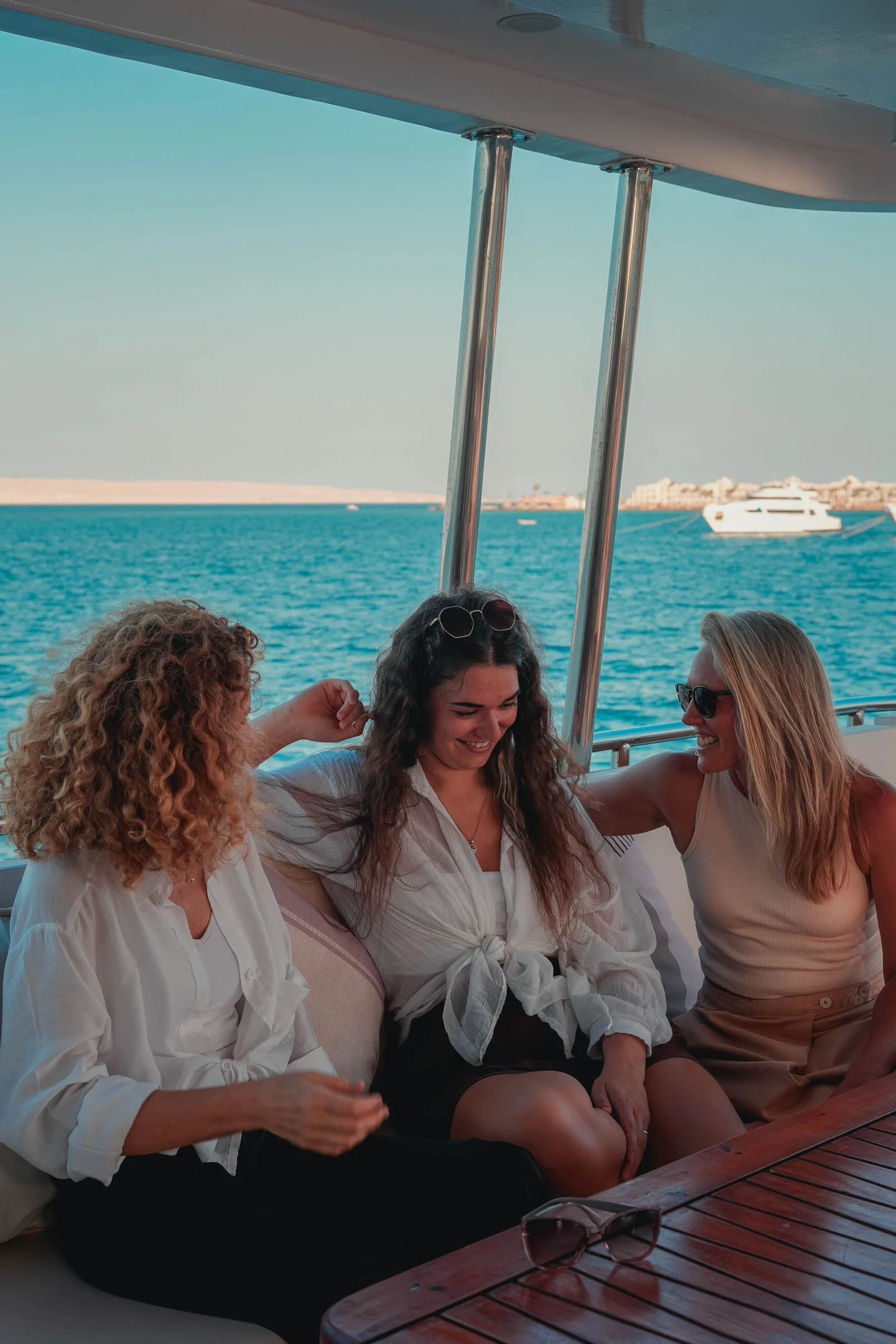
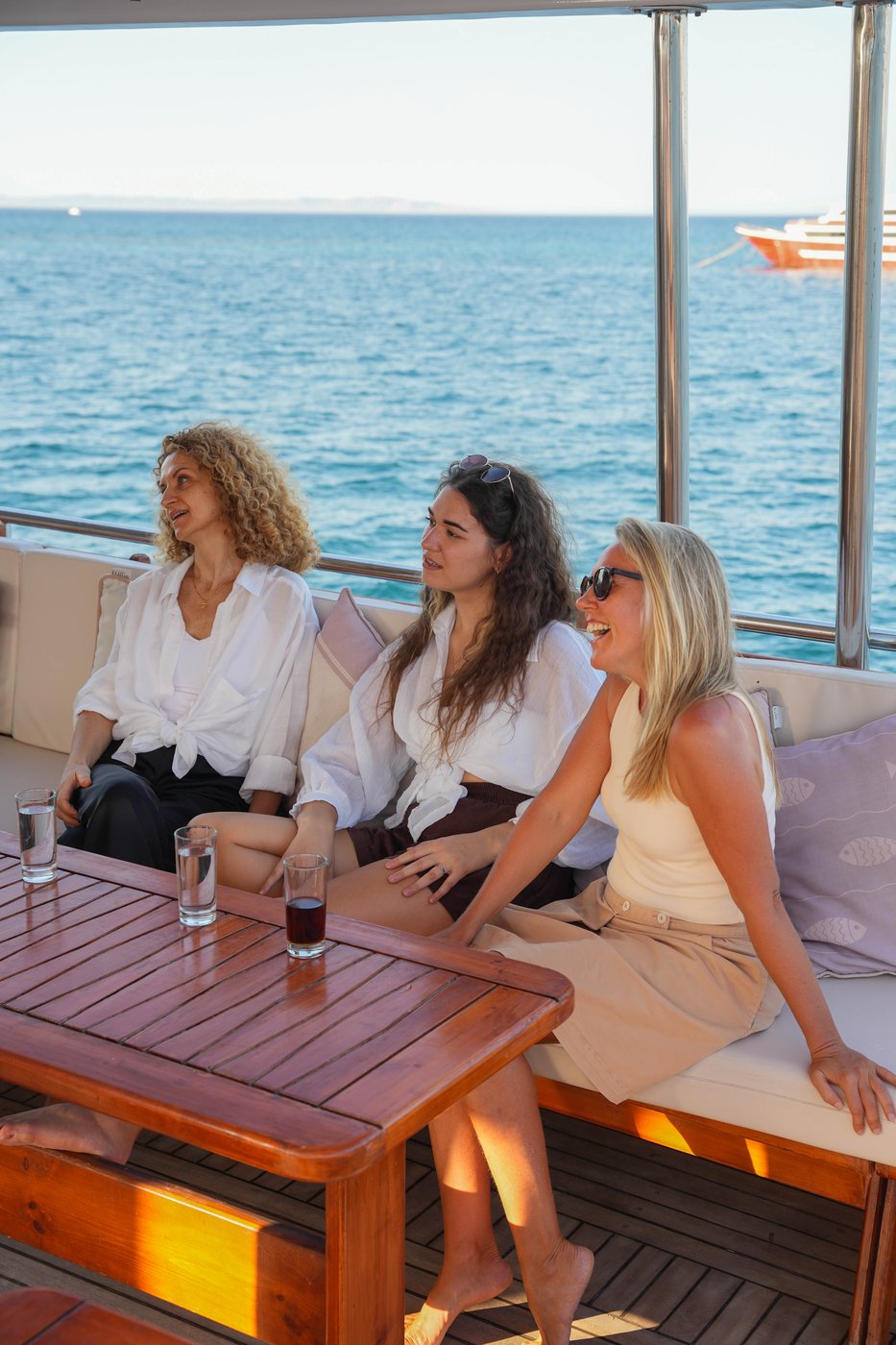
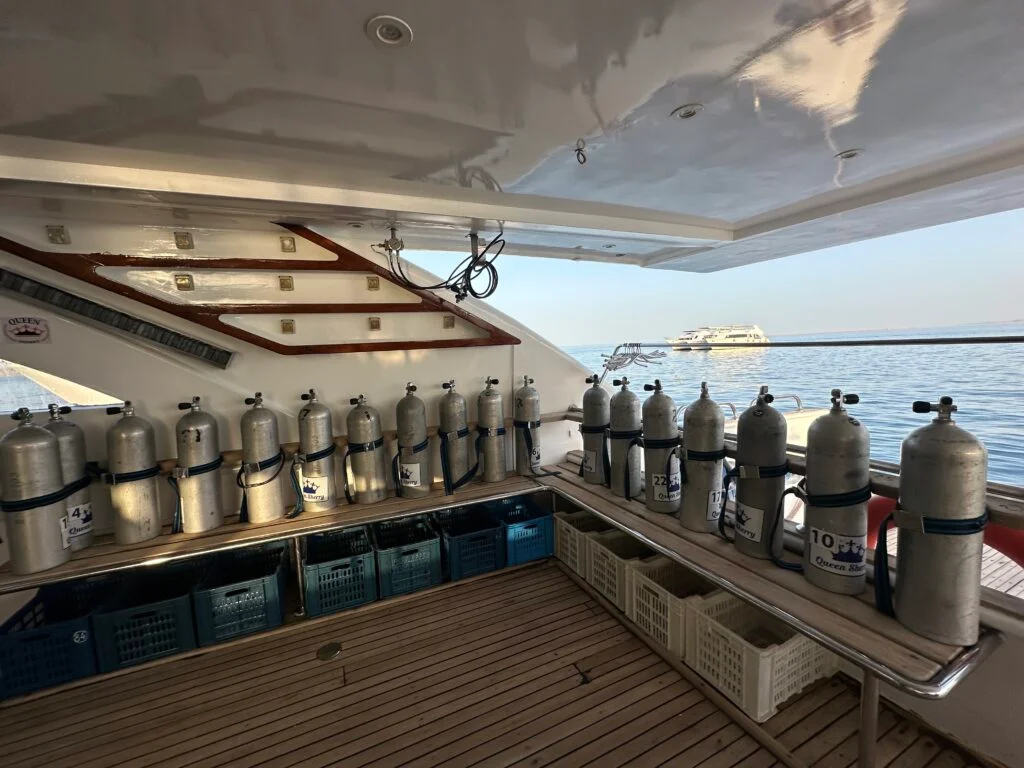
Diving, spa, and the afternoon in between.
The choice
Two ways in, one date
Everyone who calls about 2027 ends up choosing between the sea and the desert.
Most of our guests are taking the week aboard the water — diving, snorkeling and spa days that reposition to the centerline for totality, open to divers and non-divers alike. Divers chasing the season’s big fish tend to ask about the smaller liveaboard running the same date out to Daedalus and Sataya instead.
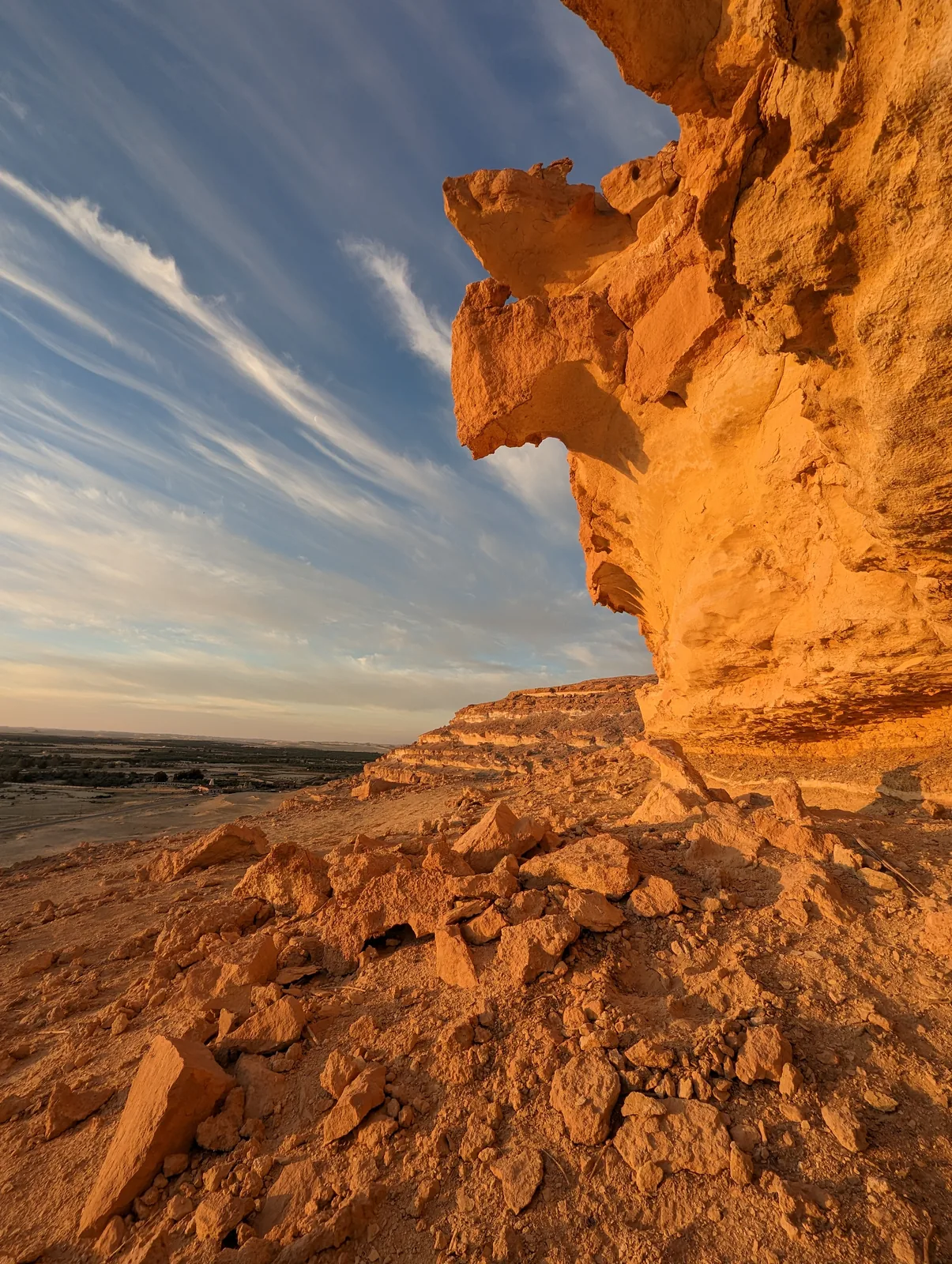
A smaller group wants dry land — dunes, salt lakes, a fortress town instead of a boat. For them we’re running the route out to Siwa Oasis, in the Western Desert, where the shadow arrives first and totality still runs past five minutes, without any of Luxor’s crowds.
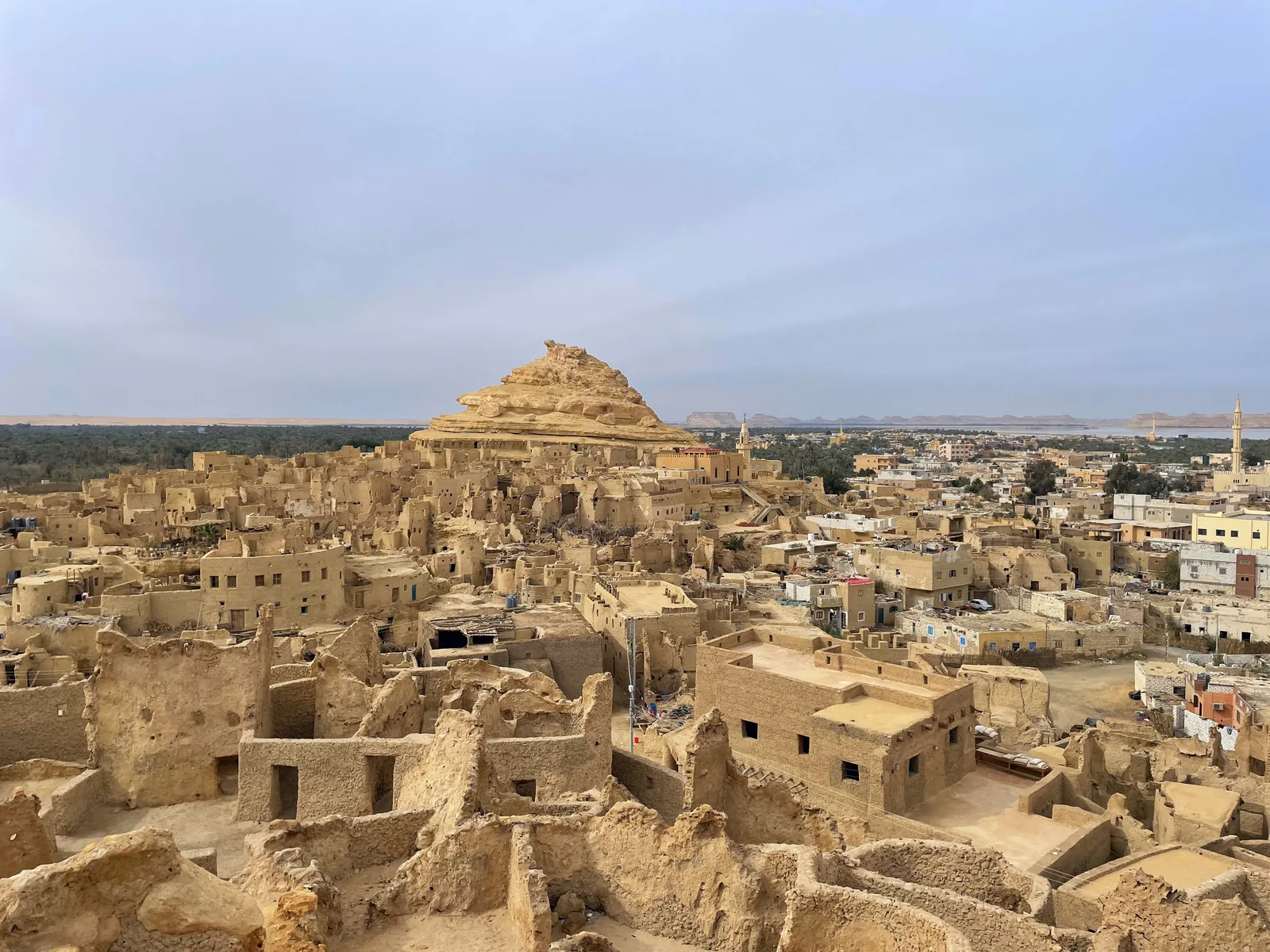
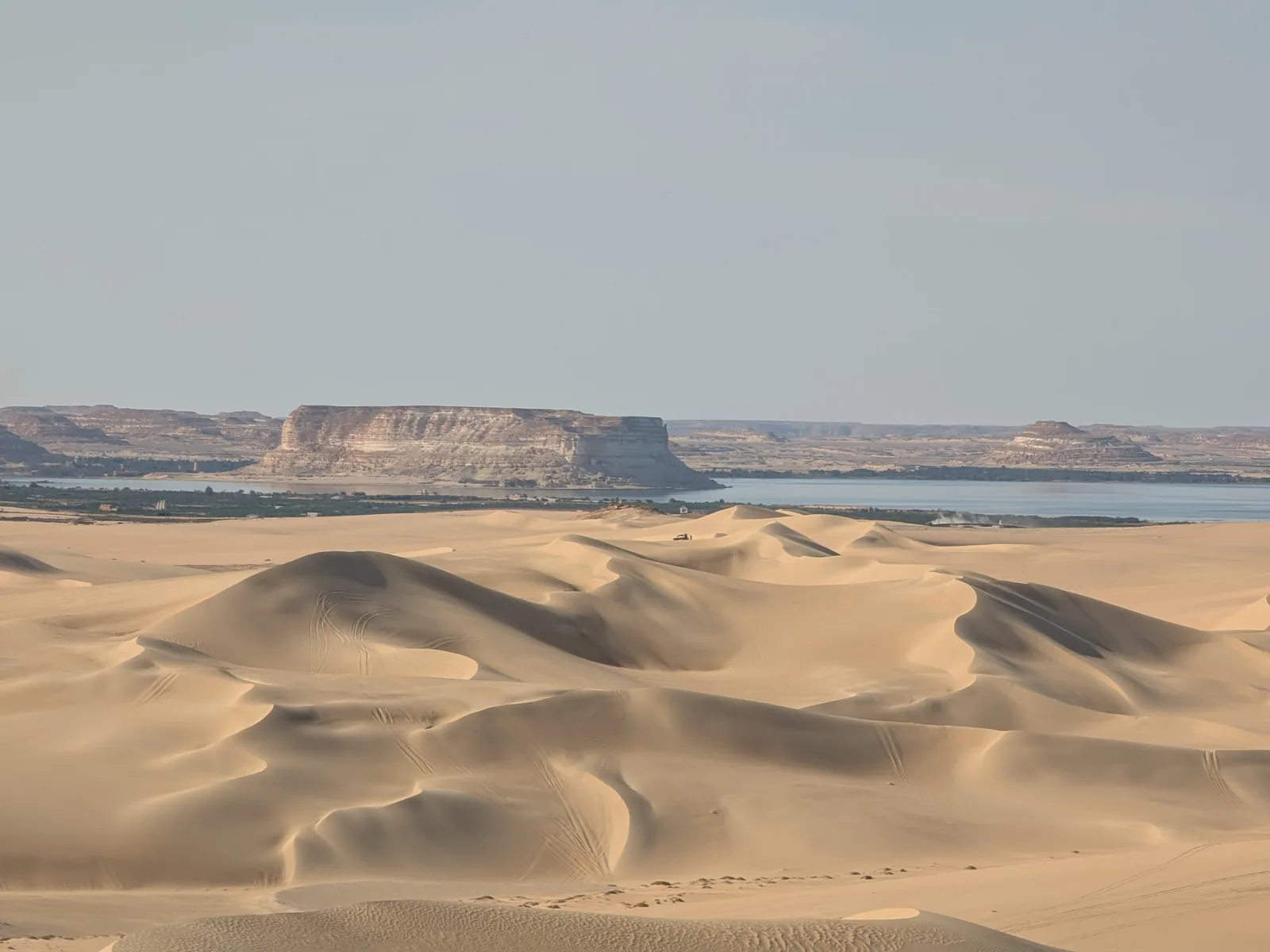
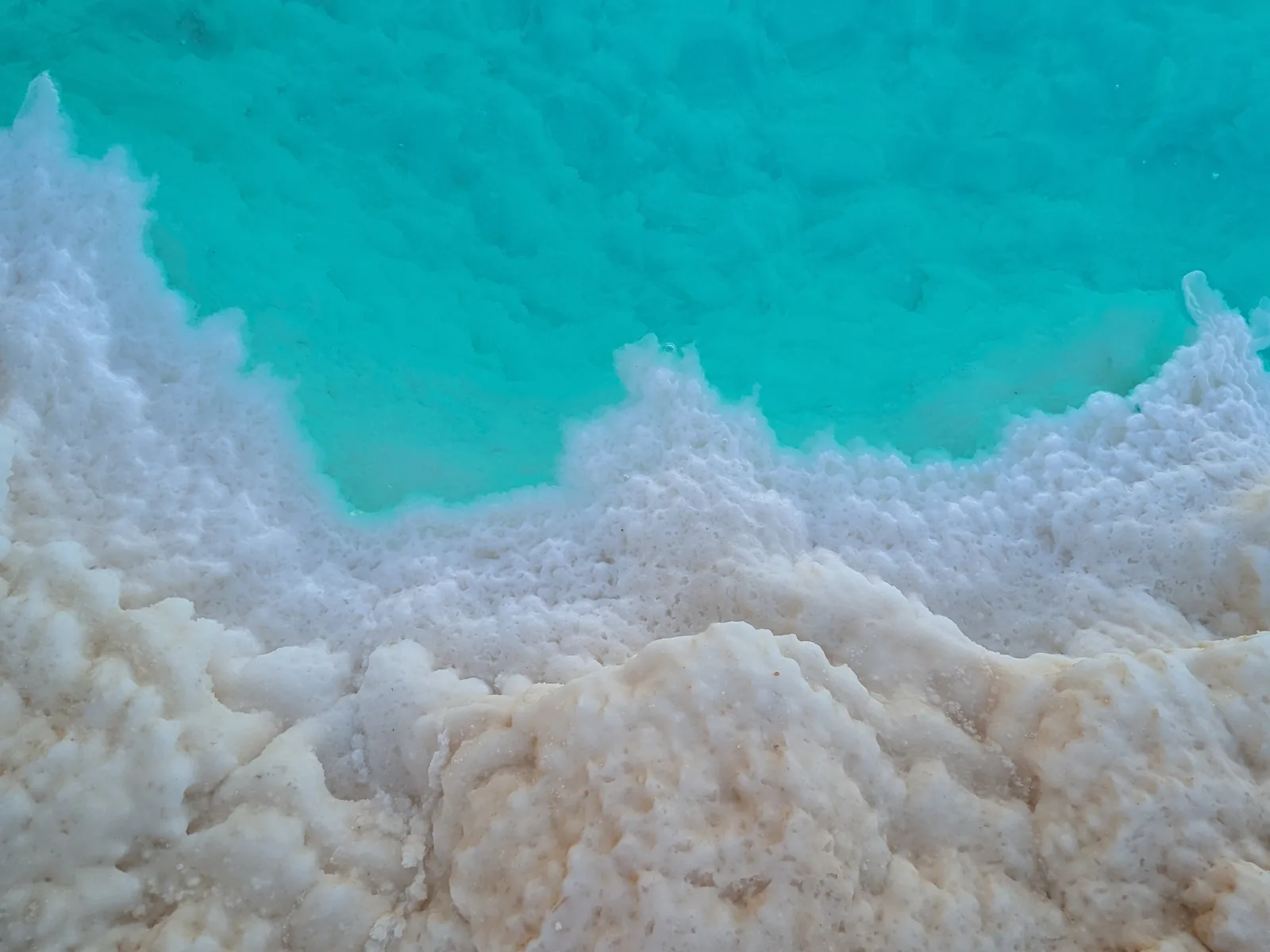
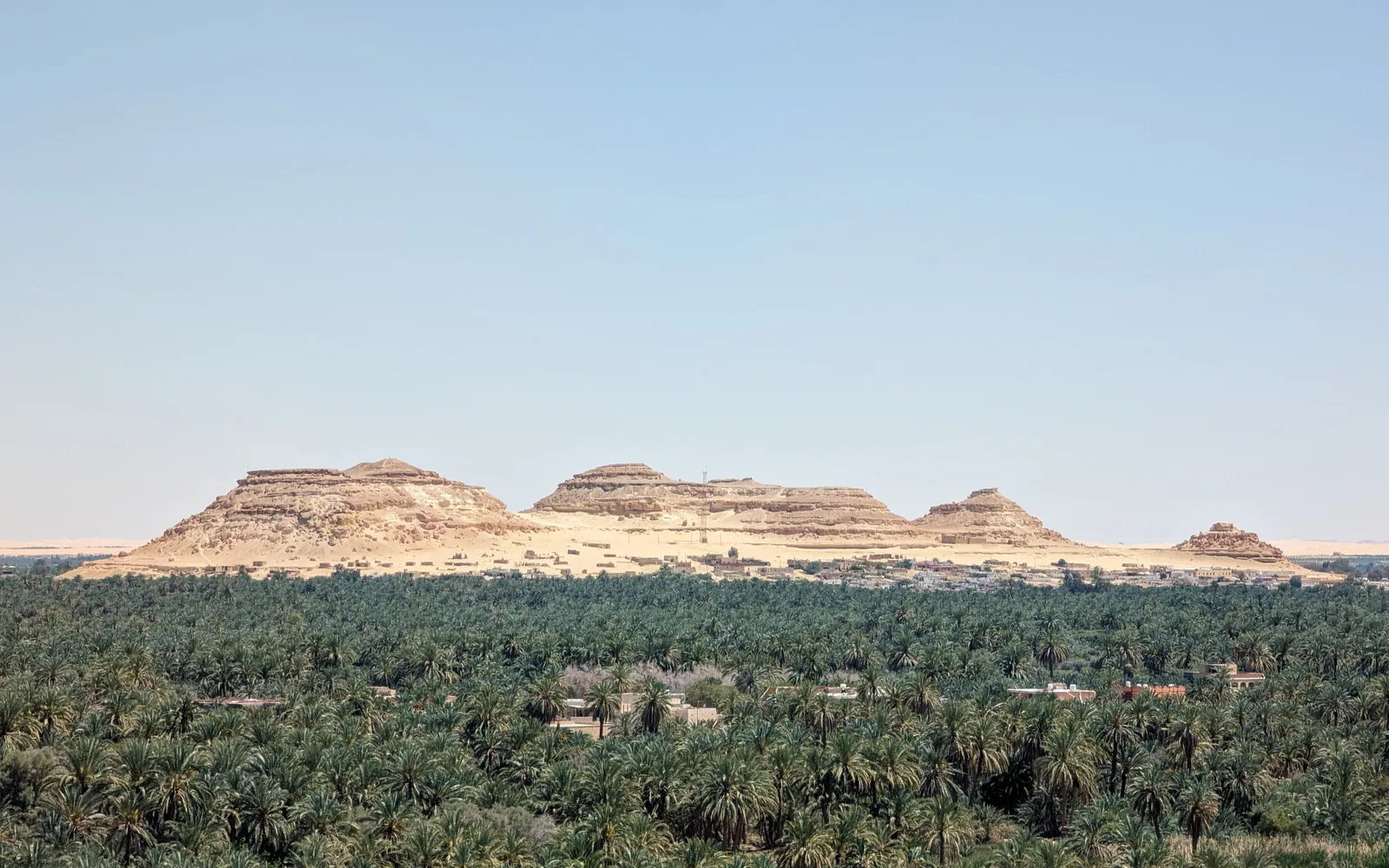
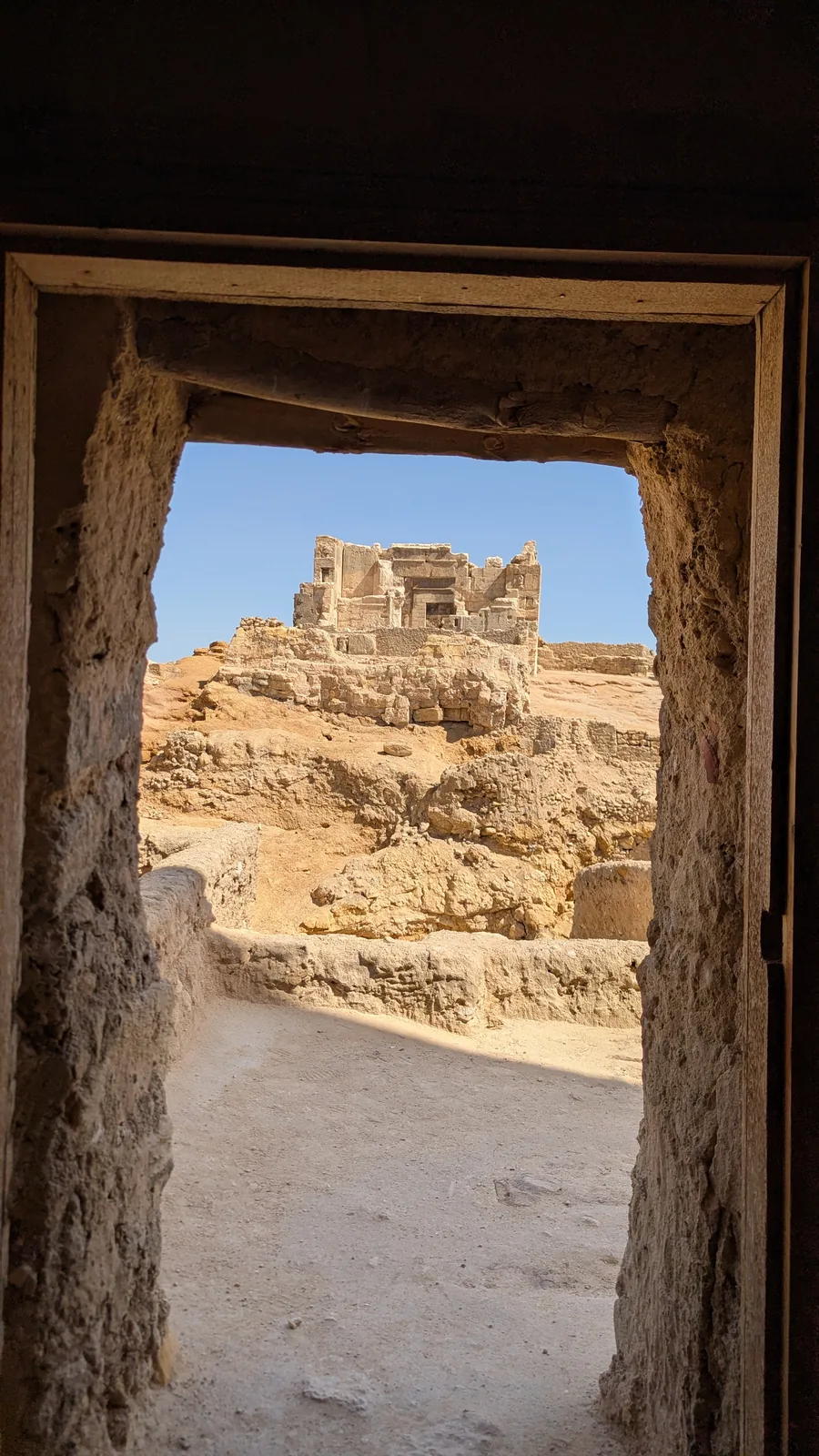
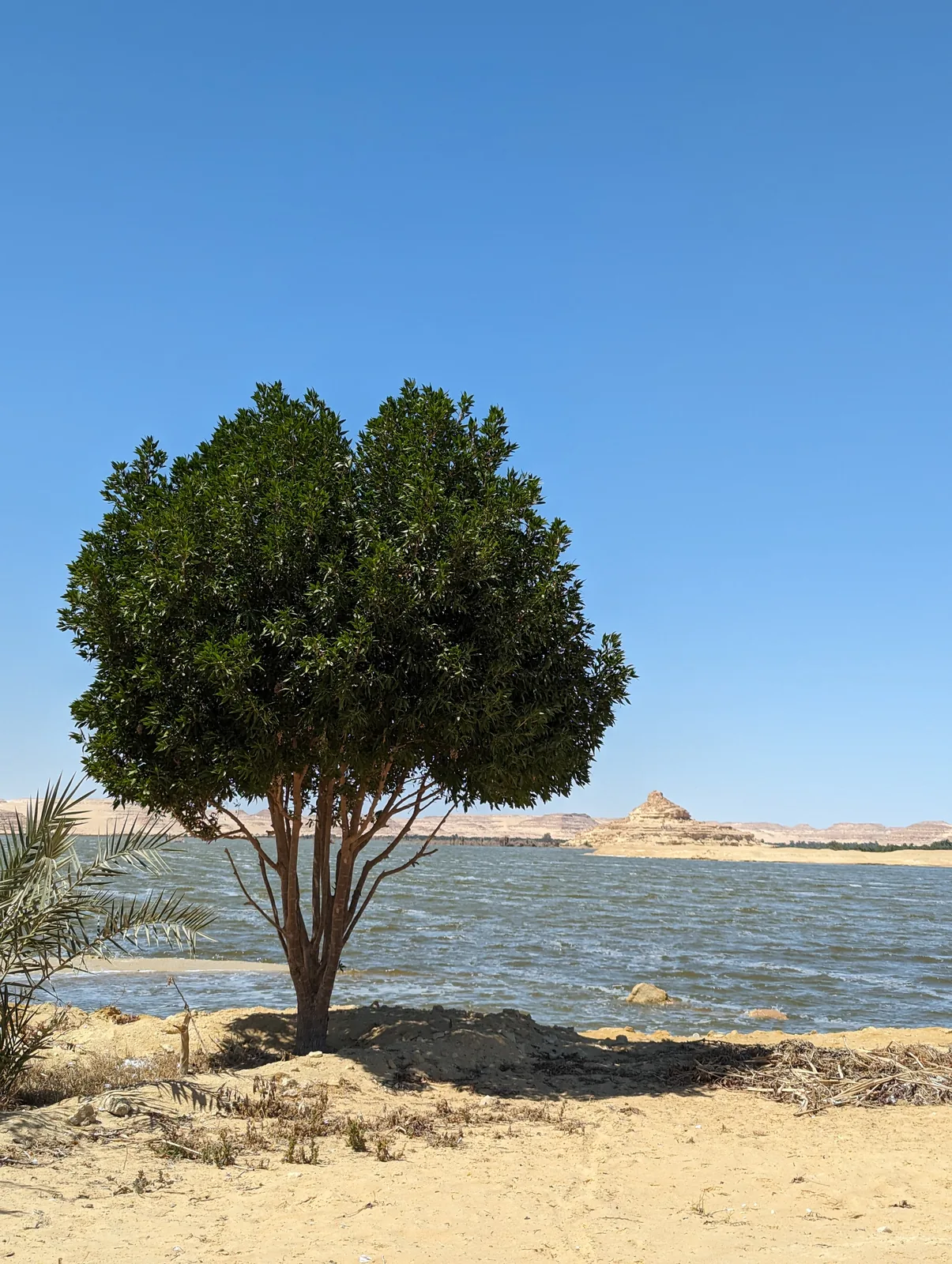
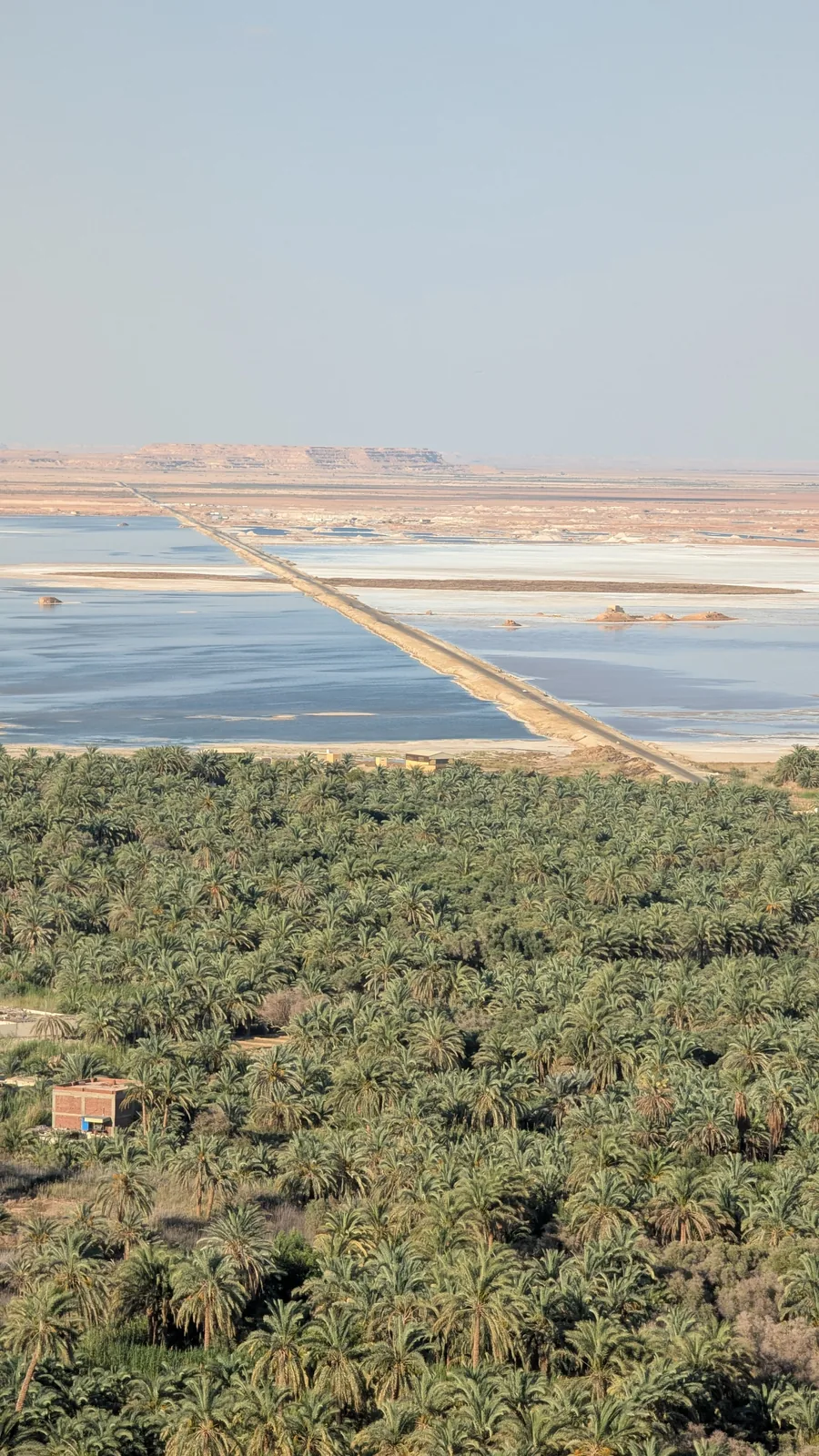
Siwa: dunes, salt lakes, palm groves and a fortress town — totality still past five minutes.
Why it matters
This one doesn’t repeat
We’ve worked the Red Sea for more than thirty years, and I can’t remember the last time a single date on the calendar organized this much of our year around it. An eclipse this long, over this stretch of coast, doesn’t come around again for decades.
If you’re already thinking about it, that’s the only signal that matters. Cabins for eclipse week are going the way everything on this coast goes in a big year — early.