Guide · Nile
Dahabeya or Nile Cruise Ship: Which Is Right for Your Group?
Group size decides it. Up to about 24 guests, a dahabeya works, and most hold far fewer. Larger groups fit a Nile cruise ship, chartered or booked as a block of cabins.
Dahabeya
6 to 12 cabins
Largest we list
Up to 24 guests
Route
Luxor to Aswan
Book first
The boat
The short answer
Both boats sail the same stretch of the Nile, between Luxor and Aswan, and both stop at the same great temples. The difference is the boat, and the boat shapes the whole week.
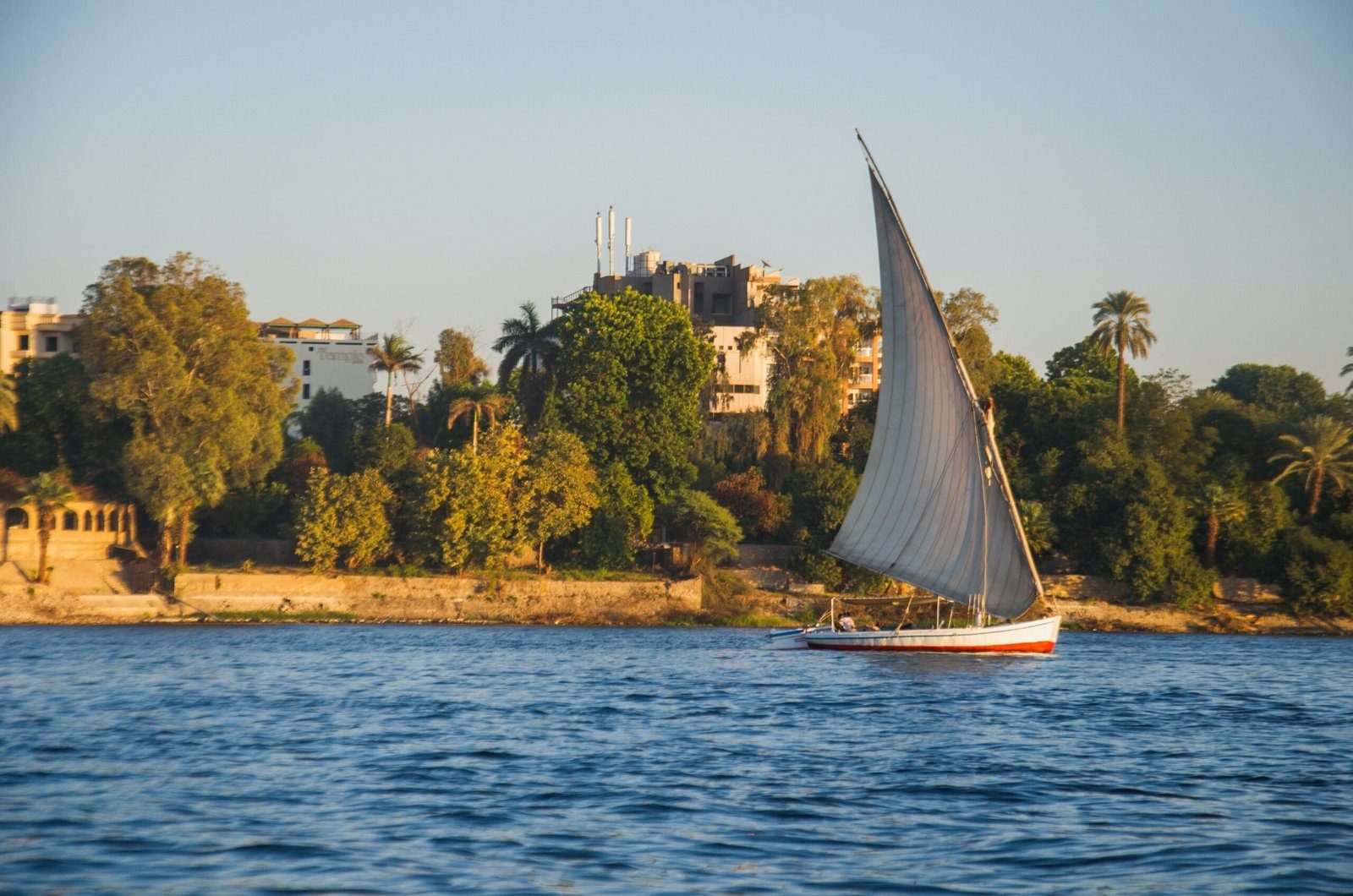
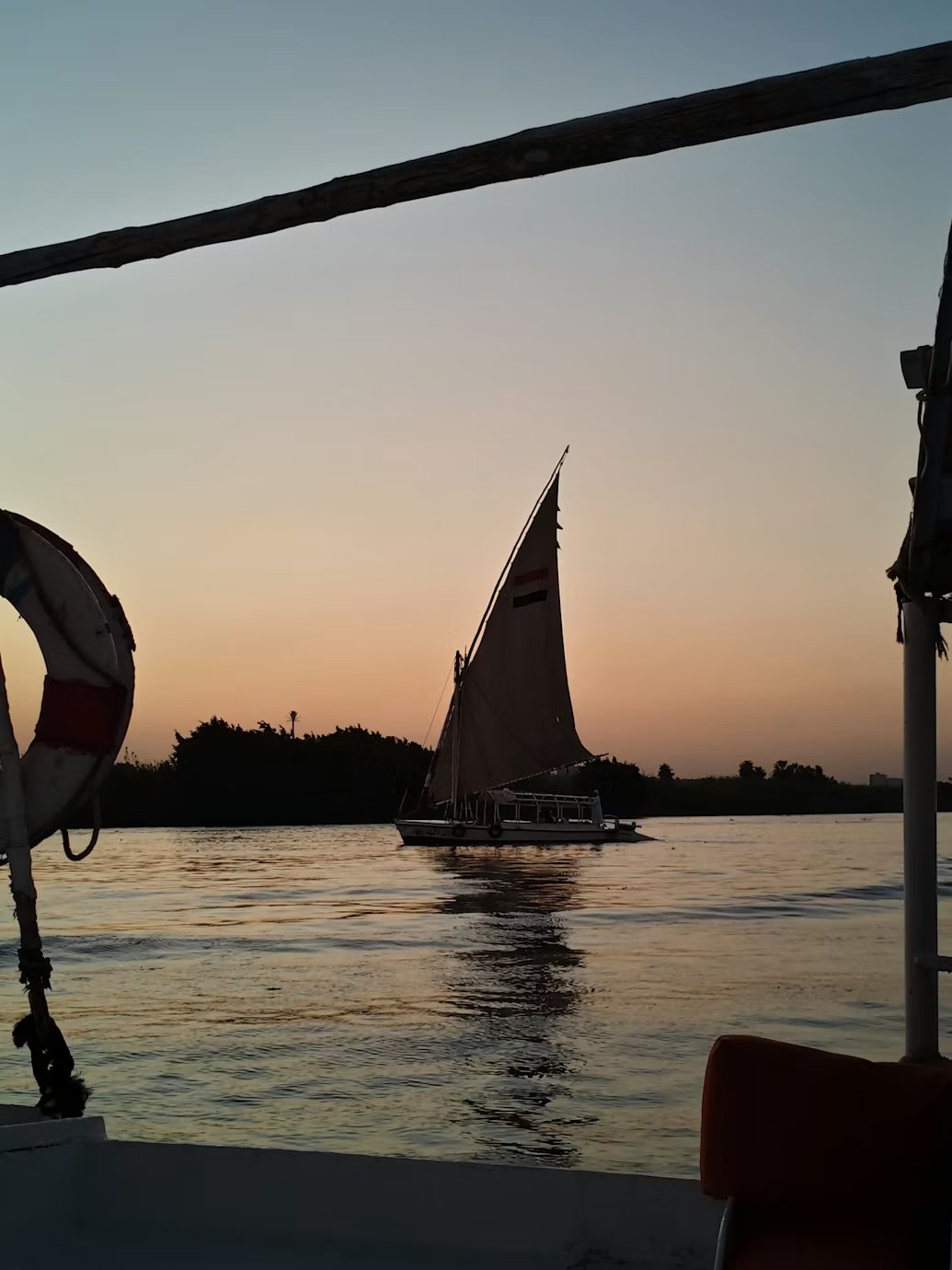
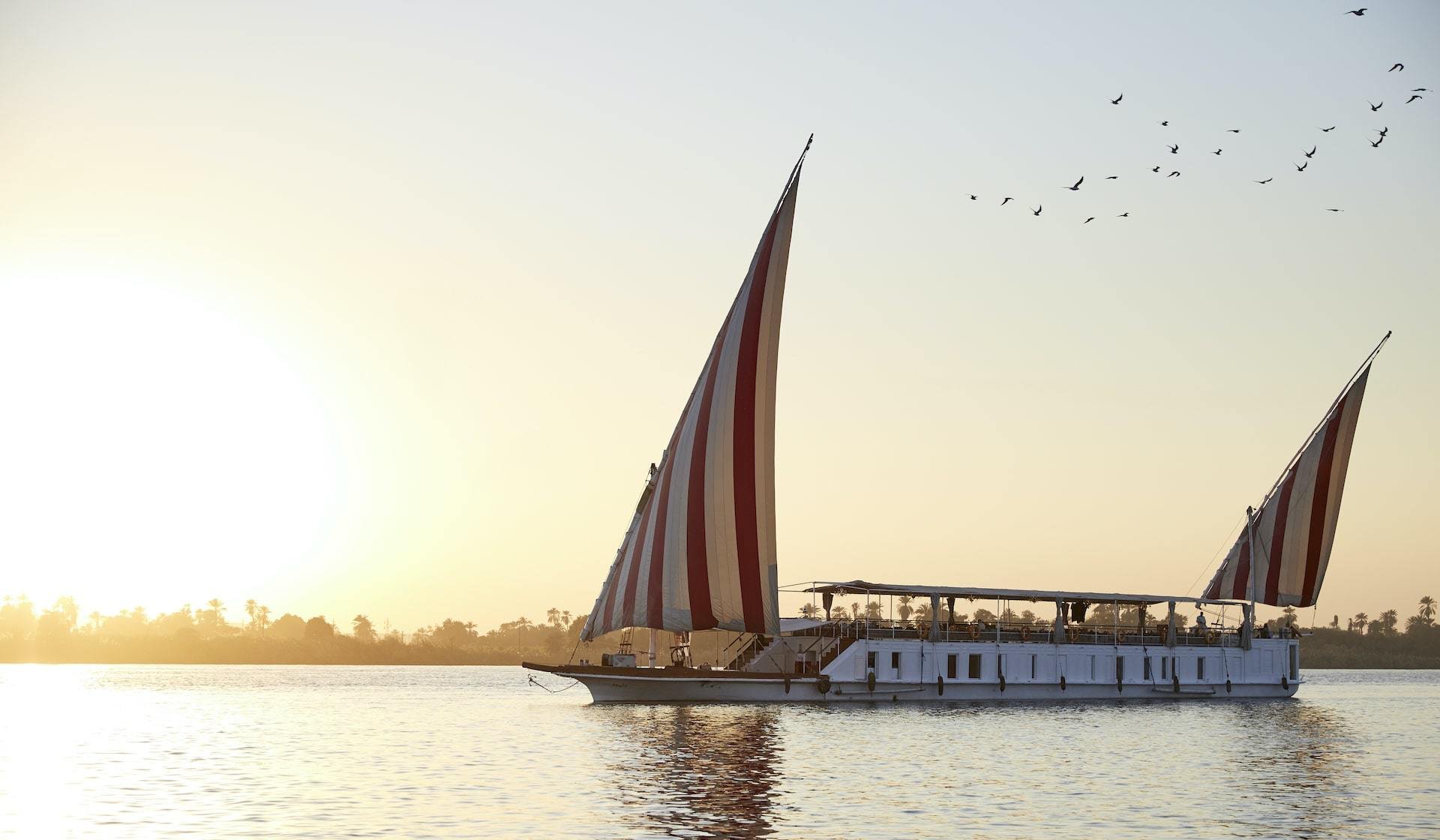
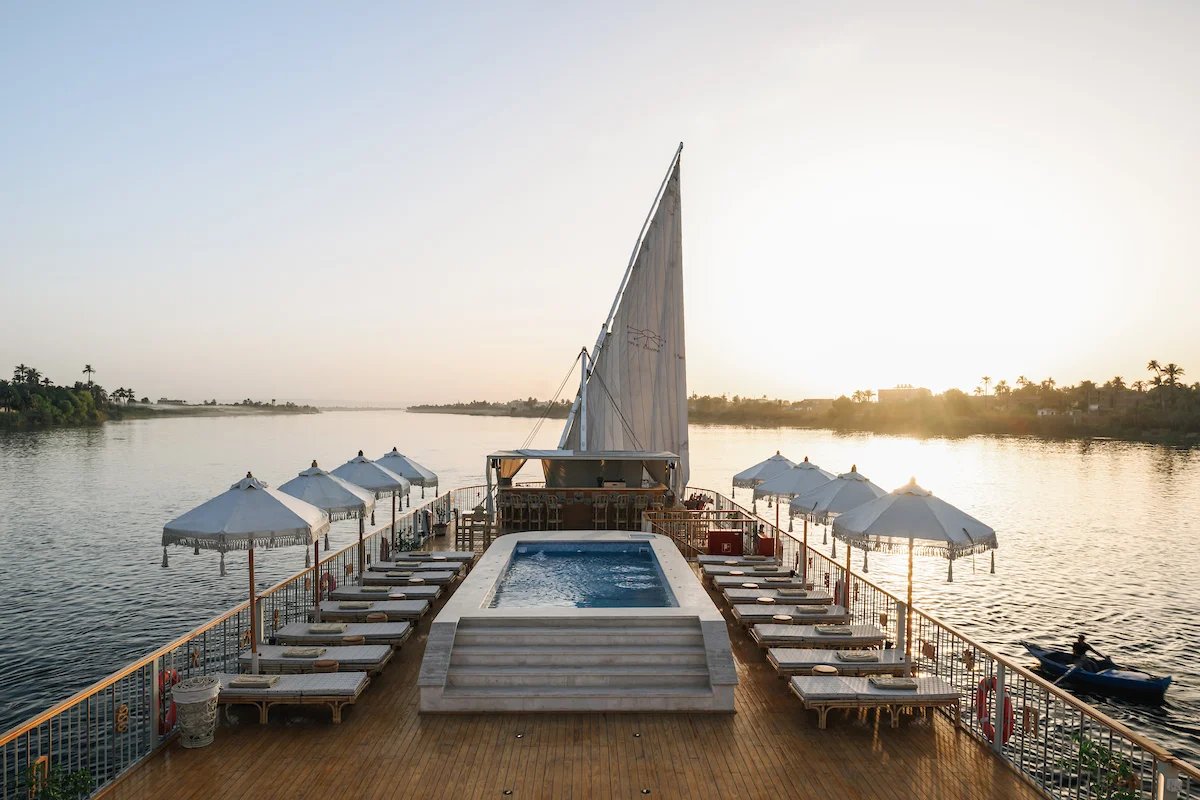
A dahabeya is a small sailing boat with a handful of cabins. Your group fills it, eats at one table and spends the evenings on one deck. A Nile cruise ship is a floating hotel with several decks and dozens of cabins, so a large group fits and people can spread out.
So start with a headcount. Count travelers, then cabins, because couples share and colleagues often do not. That number points to the right boat before anything else.
Side by side
| Dahabeya | Nile cruise ship | |
|---|---|---|
| Size | Small sailing boat | Multi-deck ship |
| Cabins | About 6 to 12 | Dozens |
| Group size | Up to about 24 on the largest | Large groups |
| Power | Mostly wind, small crew | Engines |
| Pace | Slow | Faster |
| Moorings | Quiet banks, villages, sandbanks | Town docks |
| Shared space | One deck, one saloon | Several decks and lounges |
| Typical length | 5 or 7 nights | 3 to 7 nights |
| Booking | Whole boat or a block of cabins | Whole ship or a block of cabins |
How many people fit
Most dahabeyas hold well under a dozen cabins. That is the real limit for a team, more than the season or the route.
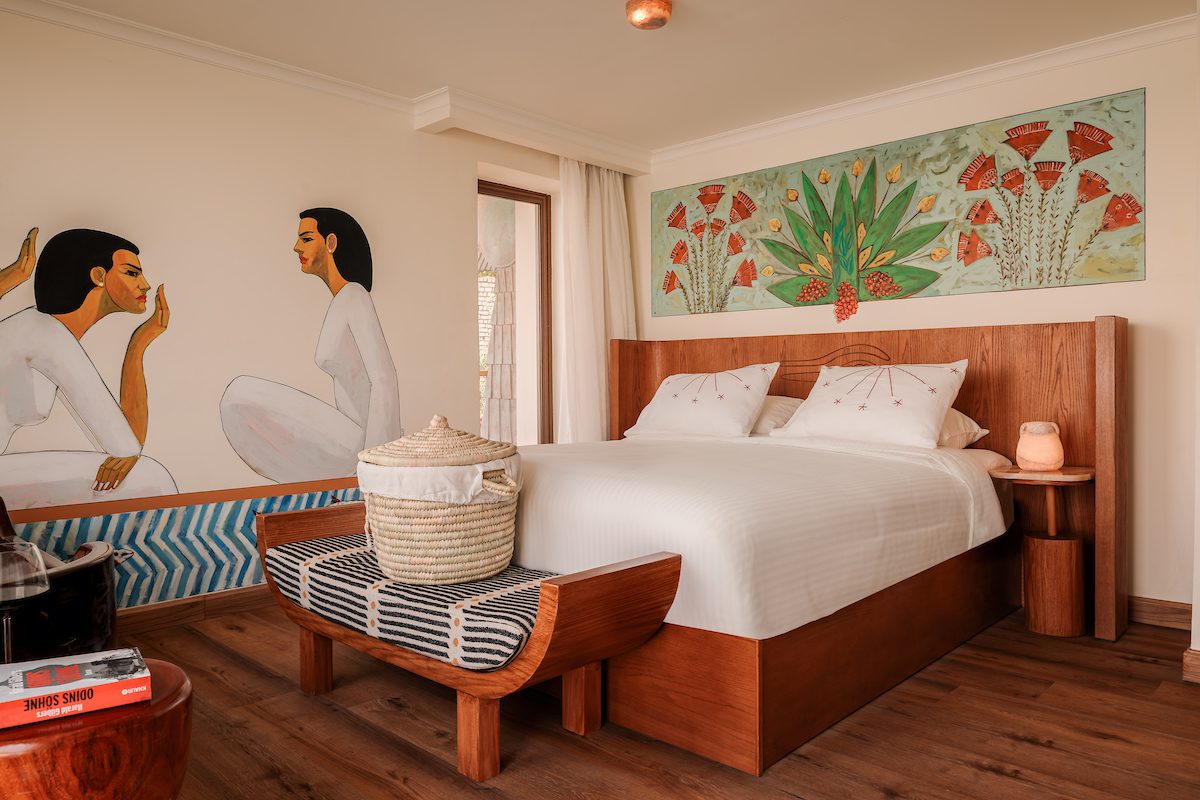
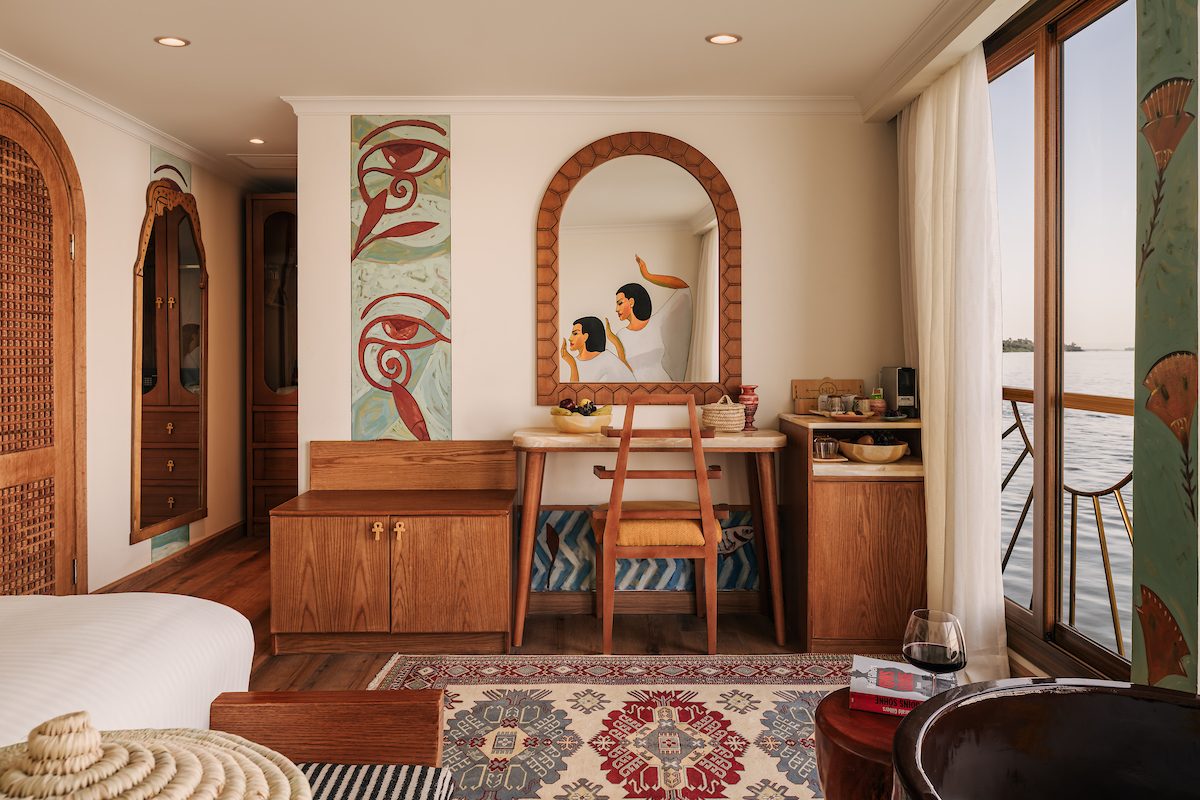
The boats Sophia recommends show the range. Nile Divine has eight cabins, each themed on a symbol of ancient Egypt and painted by Luxor artists. Nawara has twelve: ten deluxe cabins and two jacuzzi suites. Farouz El Nil runs three identical sister ships with six cabins each, at about sixteen square meters per cabin. Adelaide, the largest of the four, takes up to twenty-four guests in ten rooms and two panoramic suites.
For a team of 8 to 20, one of these boats can work, and the group gets the whole boat. For 25 or more, a cruise ship is usually the practical choice. Ask us whether two sister dahabeyas can sail the same week if you want the dahabeya experience for a bigger group.
Read Sophia’s note on these four boats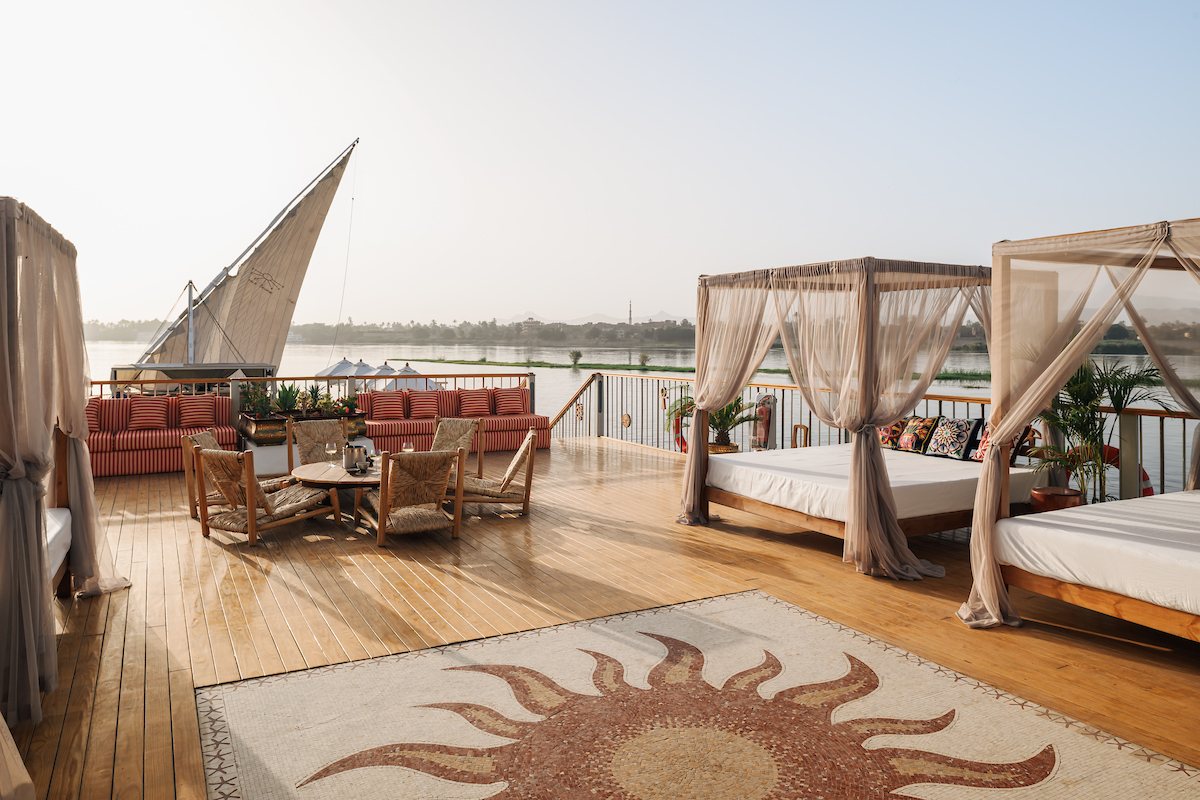
Life on board
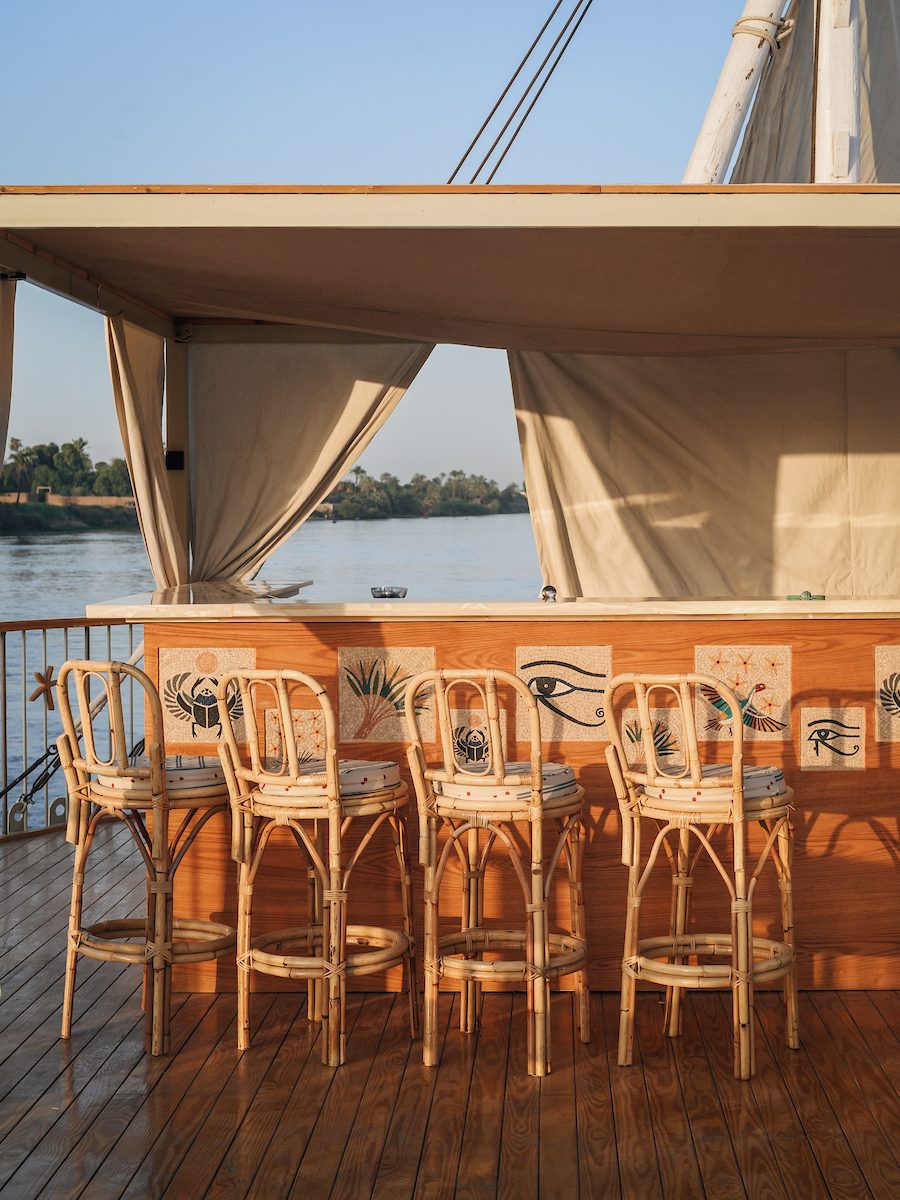
A dahabeya feels like a private house on the water. There is one dining table, one saloon and one sundeck. The team eats together, sits together at sunset and talks without being interrupted. For a leadership group, that closeness is often the point of the trip.
A cruise ship feels like a hotel. There is more space, more choice of where to sit and often a pool on the top deck. People can split into smaller groups and find quiet corners. For a wide team with different ages and energy levels, that freedom helps.
Neither is better in itself. Pick the one that matches what the trip is for: a close working group, or a larger reward trip where people want room.
Route, stops and pace
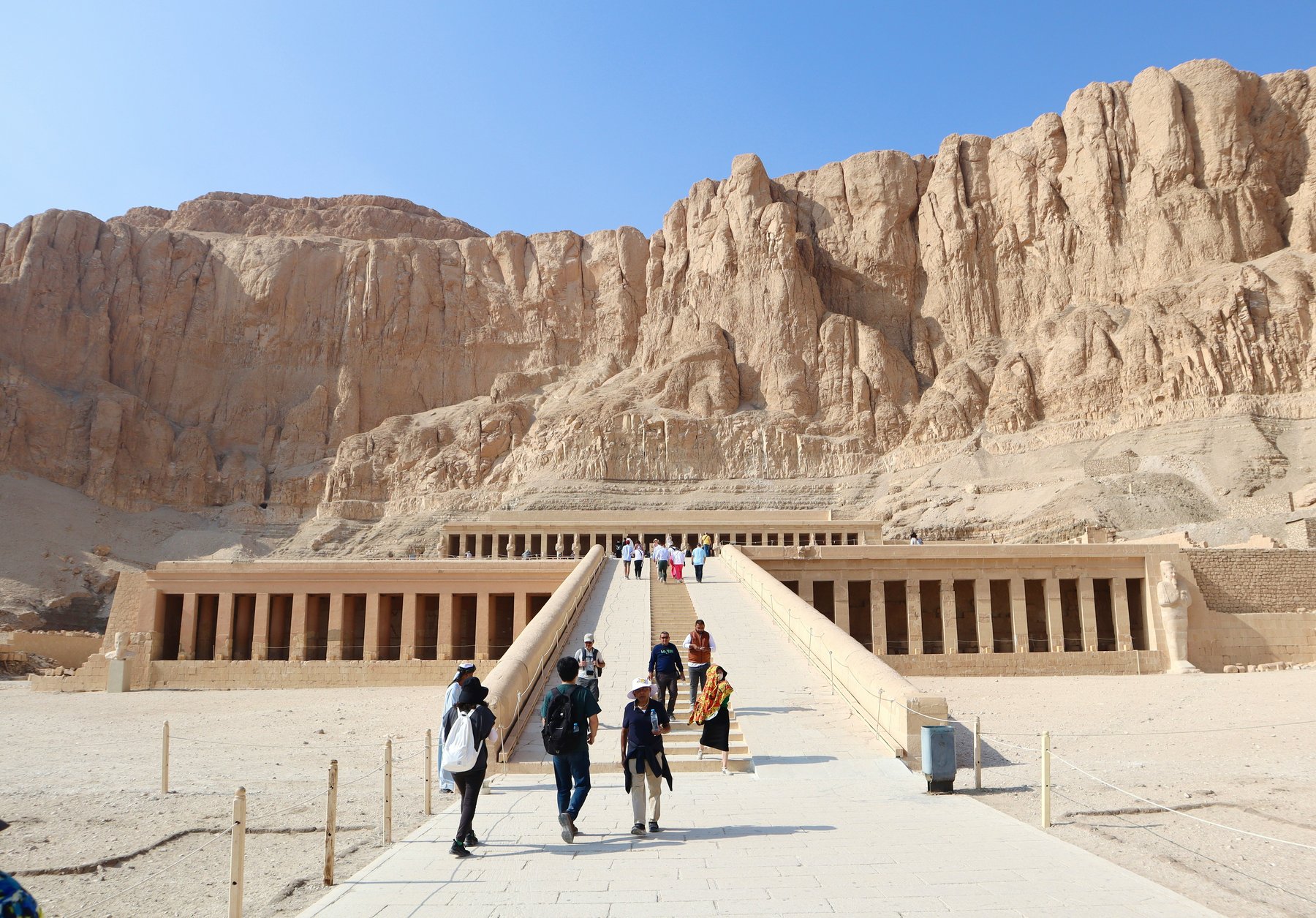
Most trips run between Luxor and Aswan, in either direction. Licensed Egyptologists join the group at each site. The core stops are the same on both kinds of boat.
A dahabeya sails mostly by wind, so it moves slowly and can moor where big ships cannot: narrow stretches of river, quiet villages and sandbanks with no dock at all. Many dahabeya routes add sites that big ships usually skip, such as the quarries of Gebel el-Silsila and the tombs of El Kab. A cruise ship covers the distance faster and ties up at town docks, which leaves more time at the main sites.
- Luxor: Karnak, Luxor Temple and the Valley of the Kings
- Esna: Temple of Khnum
- Edfu: Temple of Horus
- Kom Ombo: the double temple
- Aswan: Philae Temple
Which one fits your team
- A leadership team of 8 to 12 that wants time to talk: a dahabeya, chartered.
- A team of 15 to 24 that wants to stay together: the largest dahabeyas, chartered.
- A group of 25 or more: a cruise ship, chartered or a block of cabins.
- A mixed group with different paces: a cruise ship, for the space.
- A short window of 3 or 4 nights: a cruise ship, which offers shorter trips.
Planning and timing
The usual season runs from about October to April. November to March is the most comfortable time for walking the temples. Summer heat in Upper Egypt is intense, so plan site visits early in the day if you travel then.
Dahabeyas fill first because each one has so few cabins. Reserve the boat, then build the rest of the trip around its dates. Farouz El Nil has fixed weekly departures every Monday, which makes a date easier to secure than on a single boat with its own calendar.
Most groups combine the Nile with Cairo and the Pyramids, and many add the Red Sea. We plan the whole trip as one program, with one project manager.
What we handle on either boat
Boreas selects the Nile boats. We book a whole boat or a block of cabins, and we arrange everything around it:
- Licensed English-speaking Egyptologists at every site
- Timed monument entries
- Private transfers and domestic flights
- Group air fares from the U.S.
- One project manager and a 24/7 emergency line
FAQ
- Can a team charter a whole dahabeya?
- Yes. Most dahabeyas have six to twelve cabins, so a small team can fill one and have it to itself.
- What is the largest group a dahabeya can take?
- Of the boats we list, Adelaide takes the most: up to twenty-four guests. Most dahabeyas take fewer.
- Can we book only some cabins?
- Yes. Cabins can be booked as a block on Nile ships and on dahabeyas.
- Does a dahabeya really sail?
- Yes, mostly by wind. A small tug takes over on calm days or to keep to the schedule.
- How many nights do we need?
- A dahabeya trip is usually five or seven nights. Cruise ships also run three- and four-night trips.
- When is the best time to go?
- November to March is the most comfortable. Summer is very hot in Upper Egypt.
- Do you own the Nile boats?
- No. We select partner boats on the Nile. Our own superyacht sails the Red Sea.